
From Coffee to Matcha: My Experience After 30 Days
What happens when you replace coffee with matcha for 30 days? Read about the switch, withdrawal, and the surprising effects.
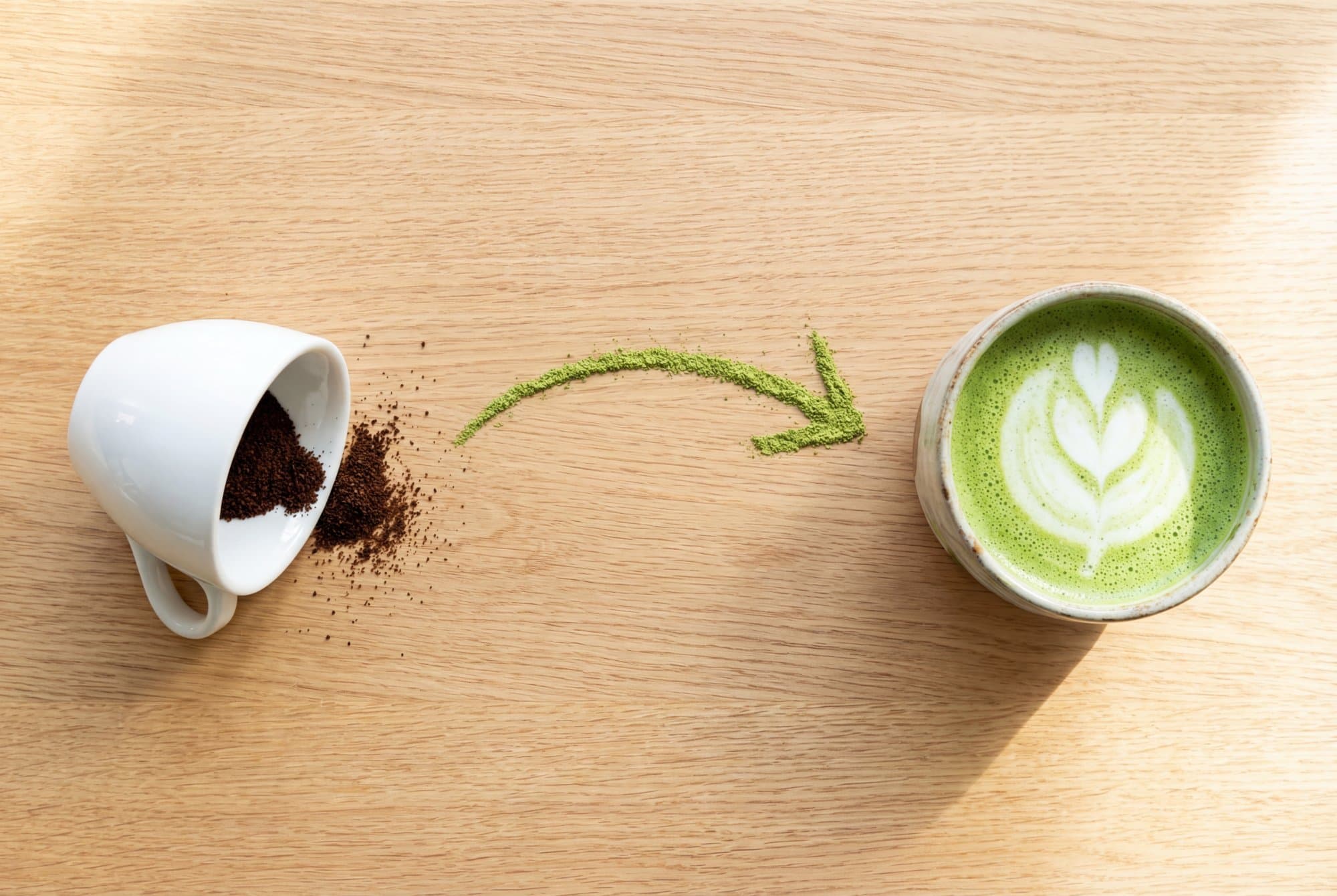
30 days without coffee, only matcha
What happens when you replace your daily coffee with matcha? We put it to the test: 30 days of no coffee, only matcha. In this article, we share the experiences week by week — from withdrawal to the surprising effects on energy, sleep, and focus.
The reason for this experiment was simple: we kept hearing from customers that matcha had changed their lives. Less stress, better focus, more stable energy. But is that really true? And how does the switch feel in practice? We decided to experience it ourselves and document everything honestly — including the difficult first days.
Want to first learn more about the [benefits of matcha](/blog/matcha-voordelen) compared to coffee? Read our detailed comparison article on [matcha versus coffee](/blog/matcha-vs-koffie).
Why switch from coffee to matcha?
Before we dive into the diary, it's good to understand why more and more people are making the switch. The main reasons we hear:
- More stable energy: Coffee gives a quick caffeine spike followed by a dip. Matcha, thanks to L-theanine, gives a steady energy boost that lasts 4 to 6 hours.
- Fewer heart palpitations and nervousness: L-theanine in matcha dampens the negative effects of caffeine, so you're alert without the jittery feeling.
- Better sleep: Less caffeine per cup and a more gradual release means matcha has less impact on your sleep quality.
- Richer in nutrients: Matcha contains antioxidants (EGCG), chlorophyll, L-theanine, fiber, and minerals. Coffee also contains antioxidants, but matcha wins on most fronts.
- A more mindful ritual: [Preparing matcha](/recepten/matcha-thee-maken) is a mindful process that forces you to pause. Sifting, whisking, slowly drinking — it's a moment of calm.
But enough theory. Let's talk practice.
Preparation: the week before
Going cold turkey from three cups of coffee to zero is not recommended. So we started tapering a week before the start:
- Day 1-3: From 3 cups of coffee to 2 cups of coffee + 1 matcha
- Day 4-5: 1 cup of coffee + 2 matcha
- Day 6-7: Only matcha
This gradual transition makes the difference. Your body adjusts to the lower caffeine level without the severe withdrawal symptoms that come with an abrupt stop.
For the matcha, we used our [A+ Grade matcha](/product/japanse-matcha-thee-a-grade-30-g-1) — the smooth taste makes the switch much easier than with a cheap, bitter matcha. We made the matcha with a [bamboo chasen](/product/bamboe-matcha-klopper-chasen-6-11-cm-80-tanden) in a [matcha bowl](/product/tokyo-design-studio-matcha-kom-kobiki-wit-13-8-cm-500-ml) for the authentic experience.
Week 1: The withdrawal
The first three days were the hardest. Although matcha also contains caffeine, it's less than coffee. A cup of matcha contains about 60 mg of caffeine versus 80-120 mg in a cup of coffee. That means your body needs to adjust to a lower caffeine level.
The most common complaints in the first week:
- A mild headache on days 2 and 3 — the classic sign of caffeine withdrawal. Not as bad as going cold turkey, but noticeable.
- Slightly more fatigue than usual, especially in the afternoon. The urge to lie down was strong.
- Missing the taste and ritual of coffee. Honestly: the smell of freshly ground coffee is what we missed most.
- Mild irritability on day 2. This passed quickly.
But there were also positive signs in week 1. On day 4, we noticed the gradual energy of matcha for the first time. No sudden alertness, but a slowly building focus. It felt different from coffee — more subtle, but longer lasting.
Tip: Gradually reduce your coffee in the week before the switch, as described above. And if you're really struggling with headaches on day 2 or 3, drink plenty of water and go for a short walk. The fresh air helps enormously.
Week 2: The adjustment
After the first week, the withdrawal symptoms disappear completely. You start to notice the difference in how matcha delivers energy — no sudden spike, but a gradual wave of focus that lasts for hours.
Many people notice in week 2:
- That they feel less need for an afternoon nap. The dreaded afternoon slump was noticeably less.
- That they are calmer yet still alert. A paradoxical feeling: you're calm but sharp. This is the effect of L-theanine in combination with caffeine.
- That the matcha latte becomes a pleasant new morning ritual. We started the morning with a [matcha latte with oat milk](/recepten/matcha-latte-havermelk) and it quickly became the highlight of the morning.
- That they sleep better. Sleep quality improved noticeably, probably due to the lower total caffeine intake.
In week 2, we also experimented with different preparations. Besides the classic matcha with water, we tried an [iced matcha latte](/recepten/iced-matcha-latte-recept) (delicious as an afternoon drink) and a [matcha smoothie bowl](/recepten/matcha-smoothie-bowl) for breakfast. The variety helped enormously to stay motivated.
Week 3: The benefits become clear
This is the moment when it really starts to stand out. The most commonly mentioned improvements:
- Better sleep quality from consuming less caffeine. We fell asleep faster and woke up less often.
- More stable energy without afternoon dips. The notorious 2:00 PM dip was virtually gone.
- Fewer heart palpitations or nervousness. Where coffee sometimes gave a restless feeling in the chest, that was completely absent with matcha.
- A calmer feeling throughout the day. Less irritable, more patient, more balanced.
- Better concentration. Longer periods of focus without getting distracted. This was perhaps the most surprising improvement.
- Better digestion. Coffee can irritate your stomach, especially on an empty stomach. With matcha, we had no issues.
In week 3, we also noticed that the craving for coffee had largely disappeared. The smell was still nice, but the need to drink it was gone. Matcha now felt like the new standard.
Week 4: The new normal
After a month, matcha feels like the new normal. The morning ritual of preparing matcha — [sifting](/product/matcha-zeef-rvs-6-9-19-2-cm), whisking with the [chasen](/blog/chasen-bamboe-matcha-klopper), slowly drinking — becomes a conscious moment of calm before the day begins. It has something of the [Japanese tea ceremony](/blog/japanse-theeceremonie): a small ritual of attention and presence.
The changes after 30 days in summary:
- Energy: More stable and longer lasting. No more peaks and valleys.
- Sleep: Noticeably improved. Falling asleep faster, sleeping deeper.
- Focus: Longer uninterrupted concentration. Less tendency to get distracted.
- Mood: Calmer and more patient. Less irritable.
- Digestion: No more stomach issues in the morning.
- Skin: More subtle, but a few people noticed clearer skin — possibly due to the antioxidants.
Interesting: Most people who do this test don't go completely back to coffee after 30 days. They drink matcha as their main beverage and have an occasional coffee when they feel like it. It becomes a conscious choice rather than an automatic habit. That was the case for us too.
The taste: do you get used to it?
A frequently asked question: if you're used to coffee, do you get used to the taste of matcha? The honest answer: yes, but it takes a few days.
Matcha tastes fundamentally different from coffee. It's greener, more umami, with a light sweetness and sometimes a bit of bitterness. In the beginning, that can take some getting used to, especially if you drink your coffee black.
Our tips for the taste:
- Start with a matcha latte instead of pure matcha. The milk (or [oat milk](/recepten/matcha-latte-havermelk)) makes the taste smoother and more accessible.
- Use good quality matcha. The difference between good and bad matcha is enormous. Read our [buying guide](/blog/matcha-kopen-gids) and choose at least an A Grade. Our [A Grade matcha](/product/japanse-matcha-thee-a-grade-30-g) is a great starting point, and the [A+ Grade](/product/japanse-matcha-thee-a-grade-30-g-1) is even smoother in taste. Check the difference between [ceremonial and culinary grade](/blog/ceremonial-vs-culinary-grade-matcha) to understand which one you need.
- Add a small amount of honey if you find the taste too bitter at first. After a week or two, you can leave out the honey — your taste buds adjust to matcha.
- Also try cold variants. An [iced matcha latte](/recepten/iced-matcha-latte-recept) or [iced matcha](/recepten/iced-matcha-recepten) tastes fresher and less bitter than hot matcha.
Tips for the switch
- Taper gradually rather than going cold turkey. Reduce your coffee intake gradually over a week.
- Start with a matcha latte with oat milk if you're not used to the pure taste yet.
- Drink your matcha in the morning as a replacement for your first coffee. The ritual replaces the coffee ritual.
- Give it at least 2 weeks before you judge. The first week is not representative.
- Invest in good matcha — bitter matcha makes the switch much harder. Browse our [matcha powder collection](/shop?collectie=matcha-poeder) for the best options.
- Invest in the right tools. A good [chasen](/product/bamboe-matcha-klopper-chasen-6-11-cm-80-tanden), [chasaku](/product/bamboe-matcha-lepel-chasaku-18-cm), and optionally a [chasen holder](/product/matcha-klopper-houder-chasen-naoshi-wit-6-8-6-2-cm) complete the ritual. Browse our [accessories](/shop?collectie=accessoires) for the full range.
- Vary your preparations. Alternate between hot matcha, iced matcha, matcha latte, and matcha in your breakfast (think [matcha pancakes](/recepten/matcha-pancakes) or a [smoothie bowl](/recepten/matcha-smoothie-bowl)).
- Store your matcha properly. Nothing is as demotivating as bad matcha due to improper storage. Read our tips on [storing matcha](/blog/matcha-bewaren).
Frequently asked questions about the switch
Do you get enough caffeine from matcha?
One cup of matcha contains about 60 mg of caffeine. If you drink two cups per day, you get 120 mg — sufficient for most people to stay alert, but without the overstimulation of coffee. Read more about [how much matcha you can drink per day](/blog/hoeveel-matcha-per-dag).
Can I use matcha if I'm pregnant?
Yes, matcha is safe during pregnancy as long as you stay within the caffeine limits. Read our full article on [matcha during pregnancy](/blog/matcha-zwangerschap) for all the details.
Can matcha help with weight loss?
Matcha can slightly increase your metabolism thanks to the combination of caffeine and EGCG. But it's not a miracle solution. Read our article on [matcha and weight loss](/blog/matcha-afvallen) for an honest look at what you can expect.
What if I really don't like the taste?
Give it a fair chance of two weeks. Start with lattes and sweeter variants. If after two weeks you still can't appreciate the taste, matcha might not be for you — and that's perfectly fine.
Try it yourself
Curious to give it a try? Start with our [A+ Grade matcha](/product/japanse-matcha-thee-a-grade-30-g-1) and a [bamboo chasen](/product/bamboe-matcha-klopper-chasen-6-11-cm-80-tanden) for the authentic experience. The smooth taste makes the switch much easier.
Looking for a complete starter pack? Browse our [gift sets](/shop?collectie=giftsets) — they contain everything you need to get started right away. Or browse our [shop](/shop) for the full selection.
Have questions about the switch? Check our [FAQ](/faq) or read more [about us](/over-ons) and feel free to get in touch. We're happy to help you on your way.
This article is based on general experiences and is not medical advice.