
Matcha During Pregnancy: Is It Safe?
Can you drink matcha when you're pregnant? Read about caffeine limits, safe amounts, and what to watch out for.
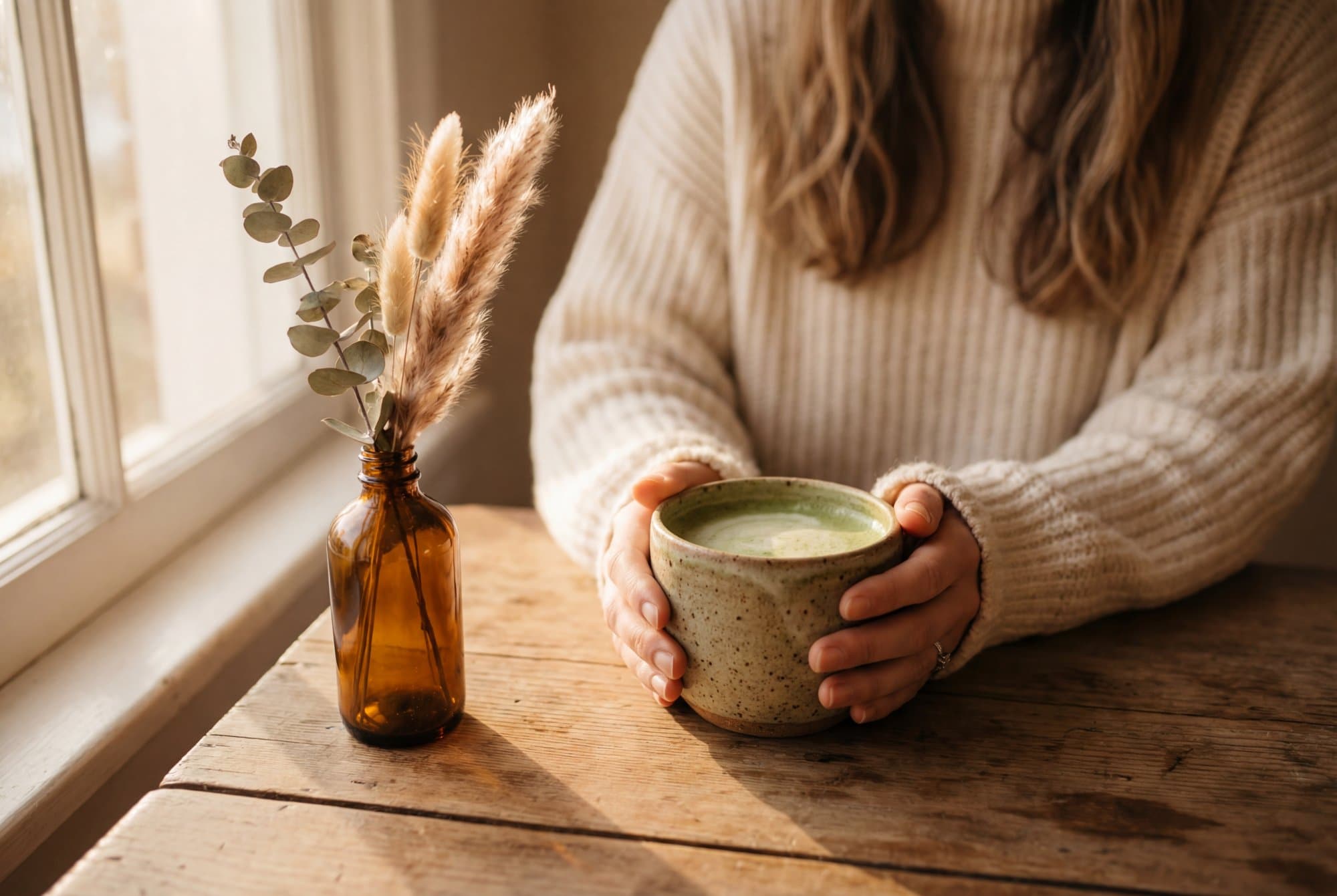
Can you drink matcha during pregnancy?
Yes, you can drink matcha during pregnancy, as long as you stay within the recommended caffeine limits. The most important thing is to keep track of your total daily caffeine intake. Matcha contains caffeine, but less than an average cup of coffee, and additionally offers a number of [health benefits](/blog/matcha-voordelen) that can be particularly welcome during pregnancy.
In this article, we discuss everything you need to know about matcha during pregnancy: how much you can safely drink, what the benefits are, what to watch out for, and what's best to avoid. We also address frequently asked questions about matcha and breastfeeding.
How much caffeine is allowed during pregnancy?
The World Health Organization and most gynecologists recommend a maximum of 200 mg of caffeine per day during pregnancy. Some guidelines, including those of the Netherlands Nutrition Centre, use an even lower maximum of 150 mg per day.
For comparison: a cup of matcha (2 grams of powder) contains approximately 60 mg of caffeine. This means you can safely drink 2 to 3 cups of matcha per day if matcha is your only source of caffeine. For comparison: an espresso contains an average of 80 mg of caffeine and a cup of filter coffee can contain up to 120 mg.
But be aware: if you also consume coffee, tea, cola, chocolate, or other caffeinated products, you need to add those to your total. It's always about the total daily intake, not the amount per drink.
Want to know exactly how much matcha you can safely drink per day, including outside of pregnancy? Read our article on [how much matcha per day](/blog/hoeveel-matcha-per-dag).
Caffeine content of common beverages
To give you a clear overview, here are the average caffeine contents of common beverages:
- Espresso (30 ml): 80 mg caffeine
- Filter coffee (150 ml): 80-120 mg caffeine
- Matcha (2 g powder): 50-70 mg caffeine
- Black tea (150 ml): 40-70 mg caffeine
- Green tea (150 ml): 25-40 mg caffeine
- Cola (330 ml): 30-40 mg caffeine
- Dark chocolate (30 g): 20-25 mg caffeine
As you can see, matcha falls between coffee and regular green tea in terms of caffeine. The big difference is that matcha also contains L-theanine, which softens the effect of caffeine. Want to learn more about this difference? Read our detailed article on [matcha versus coffee](/blog/matcha-vs-koffie).
Benefits of matcha during pregnancy
Matcha contains L-theanine, an amino acid that has a calming effect without making you drowsy. This can be particularly welcome during pregnancy, when stress and fatigue are more common. L-theanine helps you stay relaxed but alert — a combination that many pregnant women appreciate.
Additionally, matcha contains a high concentration of antioxidants, particularly EGCG (epigallocatechin gallate). These antioxidants contribute to protecting cells against free radicals. During pregnancy, your body is working extra hard, and antioxidants support your body in this.
The gradual release of energy is another important benefit. Where coffee often causes a quick spike and crash, matcha gives a more even energy boost that can last 4 to 6 hours. This can be a lifesaver if you're dealing with fatigue but don't want to drink extra coffee.
Other possible benefits of matcha during pregnancy:
- Chlorophyll: Matcha contains lots of chlorophyll, which can have a cleansing effect and contributes to healthy skin.
- Fiber and minerals: Because you consume the entire tea leaf with matcha, you get more fiber, iron, and calcium than with regular tea.
- Calming ritual: [Preparing matcha](/recepten/matcha-thee-maken) can be a nice moment of mindfulness in a busy day. The sifting, whisking, and slow drinking forces you to pause for a moment.
What should you watch out for?
Although matcha is safe within caffeine limits, there are a few important points to keep in mind:
- Limit your total caffeine intake to a maximum of 200 mg per day. Add up all your caffeine sources.
- Drink matcha preferably in the morning or early afternoon. Caffeine later in the day can disrupt your sleep, and good sleep is extra important during pregnancy.
- Choose good quality matcha. Lower qualities may contain higher concentrations of unwanted substances, such as lead or pesticides. Always choose Japanese matcha from a reliable supplier. Our [matcha powders](/shop?collectie=matcha-poeder) are of Japanese origin and high quality. Read our [buying guide](/blog/matcha-kopen-gids) for more information on what to look for.
- Avoid matcha with added sugars. Many ready-made matcha products contain a lot of sugar. Choose pure matcha powder and prepare it yourself.
- Always consult your midwife or gynecologist if you're in doubt. Every pregnancy is different, and your healthcare provider knows your specific situation best.
Preparing matcha during pregnancy
The way you prepare matcha makes a difference. Here are a few tips specifically for pregnant women:
Keep track of the amount of matcha powder carefully. Use a [chasaku](/product/bamboe-matcha-lepel-chasaku-18-cm) (traditional bamboo measuring spoon) or a teaspoon to measure the right amount. One teaspoon is approximately 2 grams and contains about 60 mg of caffeine.
Make your matcha as a latte. A [matcha latte with oat milk](/recepten/matcha-latte-havermelk) or regular milk is a delicious way to drink matcha. The milk makes the taste smoother and the calcium is a nice bonus during pregnancy. Check our [matcha latte recipe](/recepten/matcha-latte-recept) for the perfect preparation.
Always sift your matcha. By pushing your matcha through a [sieve](/product/matcha-zeef-rvs-6-9-19-2-cm) before whisking, you prevent clumps and get a smoother result. This also makes the taste more pleasant.
Use water at 70-80 degrees. Boiling water can make the taste bitter and break down valuable nutrients. Let the water cool for a minute or two after boiling.
What should you avoid?
Although matcha itself is safe in limited amounts, there are a few things you're better off avoiding:
- Matcha supplements or capsules with concentrated doses. These often contain much more EGCG than a regular cup of matcha and their safety during pregnancy has not been well studied.
- Matcha energy drinks with extra caffeine or other stimulating substances.
- Large amounts of matcha in pastry or desserts. One piece of matcha cake is fine, but keep in mind that the caffeine counts.
- Matcha on an empty stomach if you suffer from morning sickness. The tannins in matcha can worsen nausea on an empty stomach. Eat something small first before drinking matcha.
Frequently asked questions
Is matcha better than coffee during pregnancy?
Matcha and coffee are both safe within caffeine limits. The advantage of matcha is that it contains slightly less caffeine per cup and the L-theanine softens the effect. This means less chance of heart palpitations and nervousness — complaints that pregnant women can be more sensitive to. But the most important thing is your total caffeine intake, regardless of the source. If you're considering [switching from coffee to matcha](/blog/overstappen-koffie-naar-matcha), pregnancy can be a good time to try it.
Can I drink a matcha latte when pregnant?
Yes, a matcha latte with milk or plant-based milk is perfectly fine. The milk even adds useful nutrients like calcium and protein. Just watch for added sugars if you use ready-made matcha latte mixes. Preferably prepare your matcha latte yourself with pure [matcha powder](/shop?collectie=matcha-poeder) and the milk of your choice.
Can I eat matcha smoothie bowls during pregnancy?
Absolutely. A [matcha smoothie bowl](/recepten/matcha-smoothie-bowl) with fresh fruit is a nutritious breakfast that fits perfectly in a pregnancy diet. One teaspoon of matcha in your bowl contains the same amount of caffeine as a cup of matcha. Make sure to wash fresh fruit well and use pasteurized milk or plant-based milk.
What about matcha ice cream or matcha pastry?
Matcha in food products like ice cream, pastry, or chocolate is generally safe, but the amount of matcha is often small. The caffeine content is usually low, but do count it toward your daily total if you also drink matcha.
What about breastfeeding?
During breastfeeding, it's also wise to limit your caffeine intake, as a small portion of caffeine ends up in breast milk. The guideline is the same: a maximum of 200 mg per day. Babies break down caffeine more slowly than adults, so too much caffeine can cause restlessness in your baby. With 1 to 2 cups of matcha per day, you're well within the safe limits.
Which matcha is best during pregnancy?
Choose a high-quality matcha of Japanese origin. Our [A+ Grade matcha](/product/japanse-matcha-thee-a-grade-30-g-1) is an excellent choice: pure, without additives, and with a smooth taste. Read more about the [differences between ceremonial and culinary grade matcha](/blog/ceremonial-vs-culinary-grade-matcha) to make the best choice for you. Browse our [shop](/shop) for the full selection.
Summary
Matcha is safe during pregnancy as long as you stay within the 200 mg caffeine limit per day. That amounts to a maximum of 2 to 3 cups of matcha, provided you don't use other caffeine sources. The L-theanine in matcha offers a calming effect that can be particularly welcome during pregnancy, and the rich nutrients make it a good choice as a warm beverage.
Always choose quality matcha, prepare it yourself rather than using ready-made products, and keep track of your total caffeine intake. When in doubt, always consult your healthcare provider, as every pregnancy is unique.
Have questions? Check our [FAQ page](/faq) or get in touch via our [about us](/over-ons) page.
This article is purely informational and not medical advice. Always consult your midwife or gynecologist for personal advice.