
Matcha vs Coffee: Which Gives Better Energy? (Full Comparison)
Discover all the differences between matcha and coffee — from caffeine and energy to taste, health, and cost. With an honest comparison so you can make the best choice.
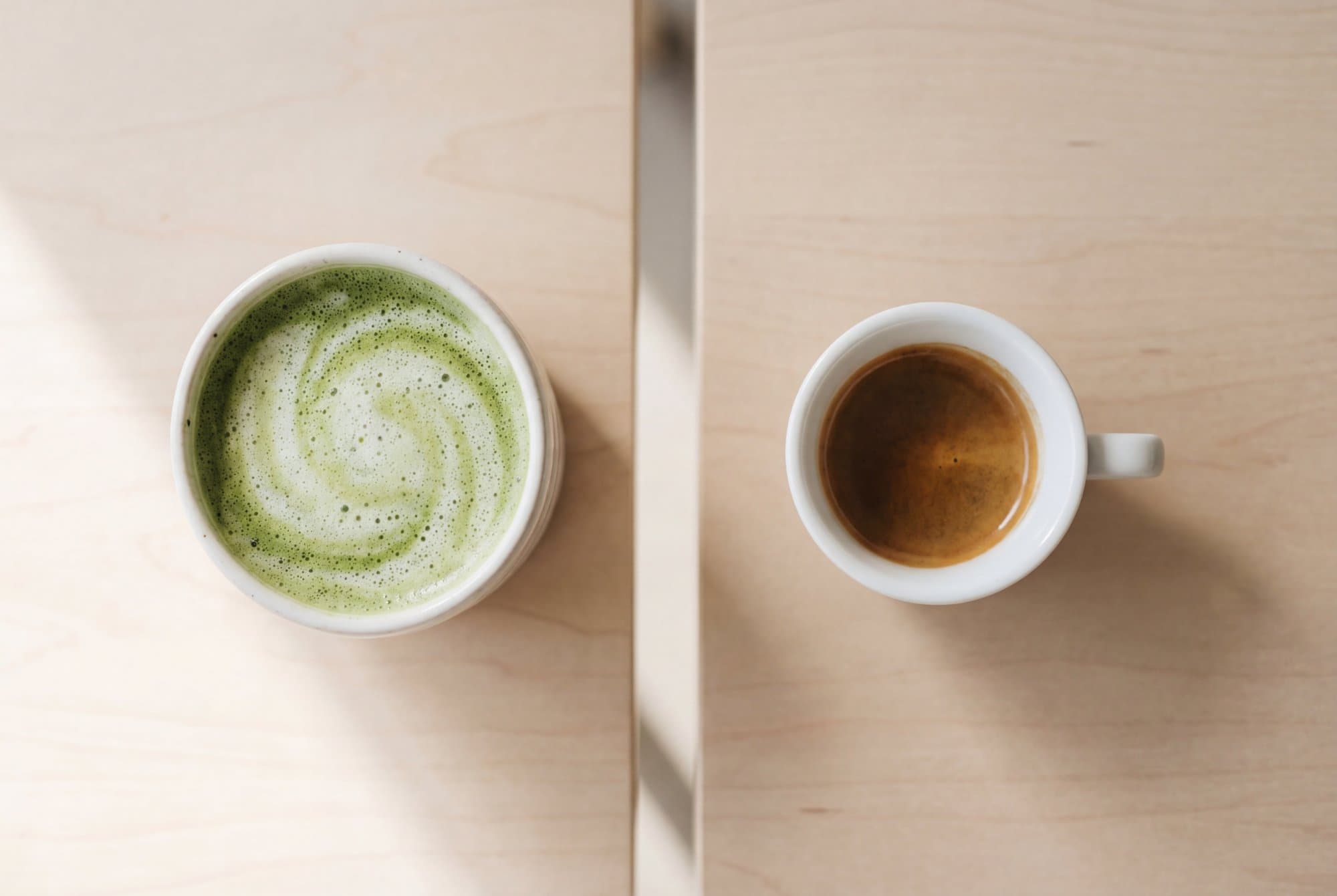
Matcha vs coffee: what's the key difference?
The biggest difference between matcha and coffee is how they deliver energy. Coffee gives a quick caffeine spike that fades after 2-3 hours, while matcha — thanks to the amino acid L-theanine — provides calm, long-lasting energy that lasts 4 to 6 hours without a crash.
> Definition: Matcha is a finely ground powder of shaded Japanese green tea leaves. It contains caffeine and L-theanine — a unique combination found nowhere else in nature. L-theanine slows the absorption of caffeine and stimulates calm alertness in the brain, making matcha fundamentally different from coffee.
Matcha or coffee: which suits you better?
Matcha and coffee both contain caffeine and give you energy, but the way they work differs enormously. Coffee gives a quick spike that fades after a few hours, while matcha provides calm, long-lasting energy that lasts 4 to 6 hours. This is due to the unique combination of caffeine and L-theanine in matcha.
In this article, we compare matcha and coffee on all the points that matter to you: energy, focus, taste, health, and cost. So you can determine for yourself which best fits your lifestyle.
Caffeine: how much is in each?
A cup of coffee contains an average of 80 to 100 mg of caffeine. A cup of matcha contains about 30 to 50 mg of caffeine per gram of powder, depending on quality. With a standard serving of 2 grams of matcha, you get 60 to 100 mg of caffeine — comparable to coffee.
The big difference isn't in the amount, but in how your body absorbs it. With coffee, all the caffeine is released at once, leading to a quick spike. With matcha, the caffeine is released gradually thanks to its binding with L-theanine and catechins. This results in a much smoother energy curve.
Energy: spike vs. gradual release
How coffee works
Coffee works fast. Within 15 minutes you feel the effect, but after 2 to 3 hours a dip often follows — the well-known coffee crash. You become tired, irritable, or restless. This is because caffeine in coffee is quickly absorbed and quickly broken down.
Many coffee drinkers compensate by drinking multiple cups per day, getting stuck in a cycle of peaks and valleys. This can lead to sleep problems, increased heart rate, and a feeling of dependency.
How matcha works
Matcha works differently. The L-theanine in matcha slows the rapid absorption of caffeine, so the energy is released gradually. You feel alert but calm, focused but not nervous. This effect lasts 4 to 6 hours without a crash.
Many people who switch from coffee to matcha describe it as a calmer kind of energy — they're productive without the nervousness that coffee can cause. Read the stories of people who made the switch in our article [Switching from coffee to matcha](/blog/overstappen-koffie-naar-matcha).
Why L-theanine makes the difference
L-theanine is an amino acid found almost exclusively in tea, and in particularly high concentrations in matcha. It stimulates the production of alpha waves in the brain, creating a state of calm alertness.
In combination with caffeine, you get the best of both worlds: energy and focus without the side effects of coffee. Scientific research confirms that the combination of L-theanine and caffeine improves cognitive performance — faster reaction times, better working memory, and more concentration.
This is also why Japanese Zen monks have been drinking matcha for centuries before meditation: it helps to be focused and calm at the same time. Read more about the health benefits in our article on [matcha benefits](/blog/matcha-voordelen).
Focus and concentration
Coffee can improve your concentration, but with too much coffee you actually become restless and distracted. The sweet spot is narrow — one cup too few and you feel nothing, one cup too many and you can't focus on anything.
With matcha, that sweet spot is much wider. Due to the gradual release of caffeine and the calming effect of L-theanine, you stay focused for hours without the peaks and valleys. This makes matcha particularly popular among students, programmers, and other knowledge workers who need long periods of concentration.
Taste: two completely different worlds
Coffee has a strong, bitter taste that most people know and appreciate. It's a taste you easily get used to, with endless variations in beans, roasts, and preparation methods.
Matcha has a completely different flavor profile: smooth, slightly grassy with a creamy umami note. Good quality matcha is never bitter — bitterness is actually a sign of low quality. If you're trying matcha for the first time, start with a [matcha latte with oat milk](/recepten/matcha-latte-havermelk). That's the easiest way to get used to the taste.
Want to experience the pure taste right away? Check out our step-by-step guide for [making matcha tea](/recepten/matcha-thee-maken).
Health compared
Both beverages have health benefits, but matcha scores higher on a few points:
- Antioxidants: matcha contains up to 137 times more antioxidants than regular green tea, primarily in the form of catechins like EGCG. Coffee also contains antioxidants, but significantly fewer.
- Nutrients: because you consume the entire tea leaf with matcha instead of just an infusion, you take in considerably more nutrients — including vitamin C, zinc, and selenium.
- Dental health: coffee can stain teeth. Matcha does this to a lesser extent.
- Stomach: coffee can stimulate stomach acid and cause stomach issues in some people. Matcha is milder on the stomach.
- Heart palpitations: many people experience heart palpitations from coffee but not from matcha, thanks to the gradual caffeine release.
More about the health benefits of matcha can be found in our detailed article on [matcha benefits](/blog/matcha-voordelen).
Cost per day
A cup of good quality coffee costs about 0.30 to 0.50 euros at home. A cup of matcha costs, depending on quality, about 0.80 to 1.50 euros per 2-gram serving.
Matcha is more expensive, but consider that you often need fewer cups per day due to the longer-lasting effect. Many matcha drinkers have 1 to 2 cups per day, while coffee drinkers often need 3 to 4 cups. Per day, you end up at comparable costs.
Curious which matcha suits you best? Read our [matcha buying guide](/blog/matcha-kopen-gids) for advice by budget.
When to choose matcha?
Matcha suits you well if you:
- Suffer from coffee dips or heart palpitations
- Are looking for calm focus for work or study
- Want to take in more antioxidants
- Are sensitive to the side effects of coffee
When to choose coffee?
Coffee remains a fine choice if you:
- Love the taste and have no complaints from it
- Need a quick boost
- Have a limited budget
Our advice: combine them
You don't have to choose. Many people successfully combine matcha and coffee: matcha in the morning for calm focus, and an occasional coffee when they feel like it. It's about what fits your lifestyle best.
Try it for a week and notice the difference yourself. Start with a cup of matcha at breakfast instead of your first coffee, and see how you feel. Most people notice a difference in their energy level and focus within two to three days.
What does the science say?
There are now dozens of studies that have compared the effects of matcha and coffee. A study published in Nutritional Neuroscience showed that participants who drank matcha performed significantly better on attention tasks than participants who only received caffeine. The researchers identified L-theanine as the determining factor.
Another study in the Journal of Chromatography compared the antioxidant capacity of different beverages. Matcha consistently scored higher than coffee, black tea, and regular green tea. The EGCG concentration in matcha was up to 137 times higher than in standard green tea.
As for coffee, there's also positive news: regular coffee consumption is associated with a lower risk of Parkinson's, type 2 diabetes, and certain liver conditions. Both beverages thus have their own strengths.
Making the switch: practical tips
If you're considering (partially) switching from coffee to matcha, here are a few tips:
Week 1: Replace your second or third cup of coffee with a [matcha latte](/recepten/matcha-latte-havermelk). Keep your first morning coffee for now.
Week 2: Now also replace your first cup of coffee with matcha. You'll notice the energy feels different — calmer but no less.
Week 3 and beyond: Experiment with pure matcha preparation. Use a [bamboo whisk](/product/bamboe-matcha-klopper-chasen-6-11-cm-80-tanden) and try our [ceremonial grade matcha](/product/japanse-matcha-thee-a-grade-30-g-1) for the best experience.
Curious to try matcha?
Browse our [ceremonial matcha](/shop?collectie=matcha-poeder) — specially selected for a smooth, non-bitter taste that's perfect for beginners and coffee switchers. With a [bamboo whisk](/product/bamboe-matcha-klopper-chasen-6-11-cm-80-tanden) included, you have everything you need to start today.
---
Frequently asked questions about matcha vs coffee
What is the biggest difference between matcha and coffee?
The biggest difference is the energy curve. Coffee gives a quick caffeine spike followed by a crash after 2-3 hours. Matcha, thanks to L-theanine, provides calm, steady energy that lasts 4 to 6 hours without a crash or dip.
Does matcha have more or less caffeine than coffee?
A serving of matcha (2 grams) contains 60-100 mg caffeine, comparable to a cup of coffee (80-100 mg). The difference isn't in the amount but in absorption: matcha releases caffeine gradually, coffee all at once.
Is matcha better for you than coffee?
Matcha contains more antioxidants (up to 137x more EGCG than regular green tea), is milder on your stomach, and causes fewer heart palpitations. Coffee also has benefits, such as a lower risk of certain diseases. Which is better depends on your body and needs.
Can I drink matcha and coffee on the same day?
Yes, you can. Just watch your total caffeine intake — the recommended limit is 400 mg per day for healthy adults. One cup of matcha plus two cups of coffee comes to around 300 mg, which is fine.
Is matcha better for your teeth than coffee?
Yes. Matcha stains teeth less than coffee. Moreover, the catechins in matcha have antibacterial properties that can reduce plaque. Coffee is more acidic and erodes tooth enamel faster.
Can I drink matcha if I'm pregnant?
Both beverages contain caffeine. Most doctors recommend staying under 200 mg of caffeine per day during pregnancy. One cup of matcha per day usually fits within that, but always consult your midwife.
This article is purely informational and not medical advice.