
10 Proven Health Benefits of Matcha
Discover the 10 proven health benefits of matcha: from antioxidants and long-lasting energy to focus and a healthy metabolism.
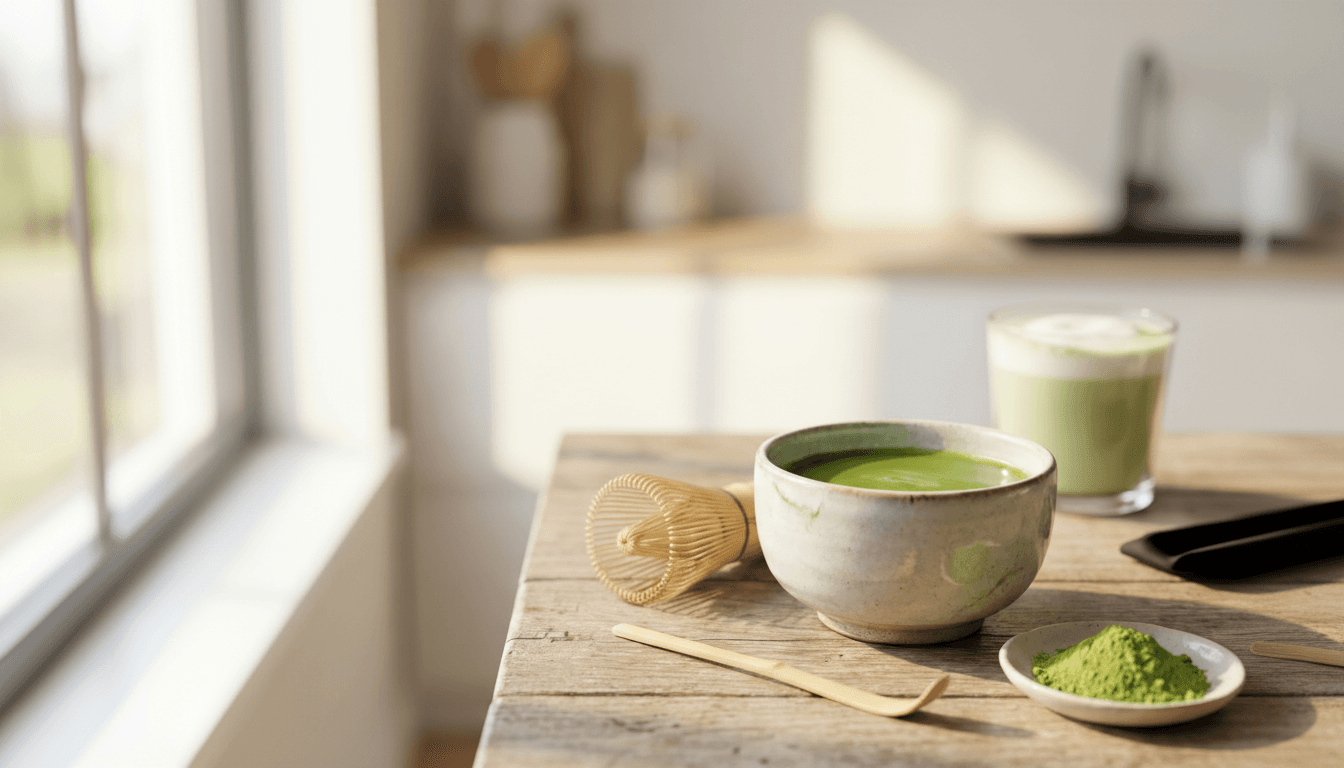
What are the benefits of matcha?
Matcha offers ten proven health benefits: it's packed with antioxidants (including EGCG), provides long-lasting energy without a crash, improves focus and concentration, supports your metabolism, has a calming effect, is good for your heart and blood vessels, strengthens your immune system, promotes healthy skin, works as a natural detox, and is versatile in use.
> Definition: Matcha is a finely ground powder of specially cultivated and processed green tea leaves. Unlike regular green tea, with matcha you consume the entire leaf, giving you up to 137 times more EGCG than a regular cup of green tea.
What is matcha, exactly?
Matcha is a special form of green tea that has been central to Japanese tea culture for centuries. Unlike regular green tea, where you steep the leaves and throw them away, with matcha you drink the entire leaf. The tea leaves are shaded for weeks before harvest, causing them to produce extra chlorophyll and amino acids. They are then dried and slowly ground on granite mills into an ultrafine powder.
This process makes matcha fundamentally different from other types of tea. Because you consume the entire leaf, you get a much higher concentration of nutrients, antioxidants, and amino acids than with regular green tea. One cup of matcha is equivalent in nutritional value to about 10 cups of regular green tea.
Curious about the different types? Read our article on [the difference between ceremonial and culinary grade matcha](/blog/ceremonial-vs-culinary-grade-matcha).
1. Rich in powerful antioxidants
Matcha contains exceptionally high levels of catechins, a type of antioxidant that fights free radicals in your body. The most important catechin in matcha is EGCG (epigallocatechin gallate), which is linked in scientific research to numerous health benefits.
One cup of matcha contains up to 137 times more EGCG than regular green tea. Antioxidants help your body protect cells from damage caused by oxidative stress, which plays a role in aging and the development of chronic conditions.
2. Calm, long-lasting energy without a crash
One of the most valued benefits of matcha is the way it provides energy. Matcha contains caffeine — about 30 to 50 mg per cup — but the effect is fundamentally different from coffee. This is due to the presence of L-theanine, an amino acid that slows the absorption of caffeine.
The result is a gradual energy boost that can last 4 to 6 hours, without the peaks and crashes you experience with coffee. Many people who switch from coffee to matcha report feeling calmer yet more alert. Also read: [Switching from coffee to matcha: here's how](/blog/overstappen-koffie-naar-matcha).
3. Improved focus and concentration
The combination of caffeine and L-theanine in matcha is unique in nature. L-theanine stimulates the production of alpha waves in the brain, which is associated with a state of calm alertness. This is the same reason why Japanese Zen monks have been drinking matcha for centuries before meditation.
Research shows that this combination improves cognitive performance: faster reaction times, better working memory, and more attention to detail. It's no coincidence that more and more students and professionals are drinking matcha as an alternative to coffee.
4. Supports your metabolism
Multiple studies suggest that the catechins in matcha, particularly EGCG, can increase thermogenesis — the process by which your body burns calories to produce heat. This can increase your metabolism by 8 to 10 percent.
Additionally, matcha can contribute to fat oxidation, especially during physical activity. This doesn't mean matcha is a miracle solution for weight loss, but it can be a useful complement to a healthy lifestyle. Read more about this in our article on [matcha and weight loss](/blog/matcha-afvallen).
5. Calming effect on mind and body
Although matcha contains caffeine, it paradoxically has a calming effect. This is thanks to L-theanine, which stimulates the production of GABA, a neurotransmitter that promotes relaxation without causing drowsiness.
Many matcha drinkers describe the feeling as a state of relaxed alertness: you're focused and productive, but without the nervousness and restlessness that coffee can cause. This makes matcha particularly suitable for people who are sensitive to the side effects of caffeine.
6. Good for your heart and blood vessels
Green tea has long been associated with cardiovascular health, and matcha offers these benefits in concentrated form. Studies indicate that regular consumption of green tea can help lower LDL cholesterol (the bad cholesterol) and improve blood pressure.
The antioxidants in matcha also help prevent the oxidation of LDL cholesterol, which is an important factor in the development of atherosclerosis.
7. Supports your immune system
In addition to catechins, matcha also contains vitamin C, zinc, and selenium — compounds that contribute to a well-functioning immune system. EGCG also has antiviral and antibacterial properties that can help your body fight off infections.
Regularly drinking matcha can thus contribute to stronger resistance, especially in combination with a varied diet and sufficient exercise.
8. Promotes healthy skin
The antioxidants in matcha protect your skin not only from within against UV damage and free radicals, but can also contribute to healthier, more radiant skin. Catechins have anti-inflammatory properties that can help with skin problems such as acne and redness.
Additionally, the chlorophyll in matcha promotes detoxification of the body, which can indirectly contribute to a clearer complexion.
9. Natural detox through chlorophyll
The shading of matcha causes the tea plant to produce extra chlorophyll. Chlorophyll is a powerful natural detoxifier that helps remove heavy metals and chemical toxins from the body.
This makes matcha a natural addition for anyone who is consciously working on a healthy lifestyle. The bright green color of matcha is, by the way, a direct indicator of the chlorophyll content — the greener, the better.
10. Versatile in use
Matcha is not only healthy but also incredibly versatile. You can drink it as traditional tea, but also incorporate it into lattes, smoothies, pastry, and even savory dishes. This makes it easy to include matcha in your daily routine.
Some popular ways to use matcha:
- Traditional matcha: pure with water, whisked with a bamboo chasen
- Matcha latte: with frothed oat milk or almond milk
- Matcha smoothie bowl: with banana, spinach, and chia seeds
- Matcha pancakes: for a healthy breakfast
Check our [matcha recipes](/recepten) for more inspiration, or discover how to make the [perfect matcha latte](/blog/de-matcha-latte-recept).
How to choose the best matcha?
Not all matcha is equal. Quality depends on origin, production process, and grade. For daily use, it's best to choose ceremonial grade matcha — this has the smoothest, sweetest taste. For lattes and recipes, culinary grade is an affordable choice.
When opening matcha, look for:
- Color: bright, vibrant green indicates high quality
- Origin: Japan (preferably Uji, Kagoshima, or Shizuoka)
- Texture: as fine as possible, without clumps
Read our comprehensive [matcha buying guide](/blog/matcha-kopen-gids) for more tips, or browse our [matcha collection](/shop?collectie=matcha-poeder) directly.
How much matcha per day is healthy?
Most experts recommend drinking 1 to 3 cups of matcha per day. This provides sufficient antioxidants and L-theanine without consuming too much caffeine. Read our article on [how much matcha you can drink per day](/blog/hoeveel-matcha-per-dag) for detailed advice.
The science behind matcha
The health benefits of matcha are not only based on tradition — there is a growing body of scientific studies supporting the effects. A meta-analysis published in the European Journal of Clinical Nutrition showed that regular consumption of green tea significantly contributes to lowering total cholesterol levels and blood pressure.
Specifically for matcha, it has been demonstrated that the EGCG concentration is three times higher than in the highest quality regular green tea. This is because with matcha you consume the entire leaf rather than an infusion. Japanese researchers from the University of Shizuoka also discovered that the L-theanine in matcha can reduce cortisol levels in the blood, indicating a direct stress-reducing effect.
It's important to emphasize that matcha is not a medicine and does not cure diseases. But as part of a healthy lifestyle, it can make a valuable contribution to your overall well-being.
Comparing matcha with other superfoods
Matcha is often compared with other so-called superfoods, and the results are impressive. In terms of antioxidant capacity (measured in ORAC values), matcha scores higher than blueberries, acai, pomegranate, and spinach. Where 1 gram of blueberries contains about 24 ORAC units, 1 gram of matcha delivers more than 1300 ORAC units.
Of course, comparing foods is always somewhat artificial — each food has its own unique nutritional profile. But it illustrates why matcha has become so popular among health-conscious consumers worldwide.
Want to combine matcha with other healthy ingredients?
Try our [matcha smoothie bowl](/recepten/matcha-smoothie-bowl) for a nutritious breakfast, or make a refreshing [iced matcha](/recepten/iced-matcha-recepten) for warm days.
How to get started with matcha
If you've never tasted matcha, we recommend starting with ceremonial grade matcha of good quality. A bad first experience with bitter, cheap matcha can distort your impression of this wonderful product. Quality matcha tastes smooth, slightly sweet, and has a creamy umami flavor — very different from what you might have tasted at a random cafe.
For accessories, you need a bamboo matcha whisk (chasen) ([/product/bamboe-matcha-klopper-chasen-6-11-cm-80-tanden]) and optionally a matcha spoon (chasaku) ([/product/bamboe-lepel-chasaku-18-cm]) for proper dosing. Check our [guide on how to make matcha tea](/recepten/matcha-thee-maken) for a step-by-step explanation.
Conclusion
Matcha is much more than a trend — it's a centuries-old beverage with scientifically supported health benefits. From more energy and better focus to stronger immunity and healthier skin: the benefits are numerous and diverse.
The beauty of matcha is that it's easy to fit into your daily routine. Whether you want to hold a traditional matcha ceremony or simply drink a matcha latte at breakfast — your body benefits either way.
---
Frequently asked questions about matcha benefits
What is the biggest advantage of matcha over coffee?
The biggest advantage is the combination of caffeine and L-theanine. Where coffee gives a quick energy spike followed by a crash, matcha provides a calm, long-lasting energy boost of 4 to 6 hours without peaks or crashes.
Is drinking matcha every day healthy?
Yes, drinking matcha daily is safe and healthy for most people. Experts recommend 1 to 3 cups per day. Due to the caffeine, it's wise not to drink matcha right before bedtime.
How many antioxidants are in matcha?
One cup of matcha contains up to 137 times more EGCG (a powerful antioxidant) than regular green tea. In terms of ORAC value (a measure of antioxidant capacity), matcha scores higher than blueberries, acai, and spinach.
Does matcha help with weight loss?
Matcha can play a supportive role in weight management by increasing thermogenesis (fat burning) by 8 to 10 percent. However, it's not a miracle solution — it works best as part of a healthy lifestyle.
What is the difference between ceremonial and culinary grade matcha?
Ceremonial grade matcha is the highest quality: smooth in taste, bright green, and suitable for drinking pure. Culinary grade is slightly less fine and slightly more bitter, but great for lattes, smoothies, and baking. Read more in our article on [the difference between ceremonial and culinary grade matcha](/blog/ceremonial-vs-culinary-grade-matcha).
Can I drink matcha if I'm sensitive to caffeine?
Matcha contains caffeine (30-50 mg per cup), but the L-theanine ensures a calmer absorption. Many people who are sensitive to coffee tolerate matcha better. Still, it's wise to start with half a teaspoon and see how your body reacts.
Disclaimer: this article is purely informational and not medical advice. Always consult a doctor for health-related questions.