
Matcha for Beginners: Everything You Need to Know to Get Started
Getting started with matcha? Discover which matcha to choose, what accessories you need, and how to make your first perfect cup step by step.
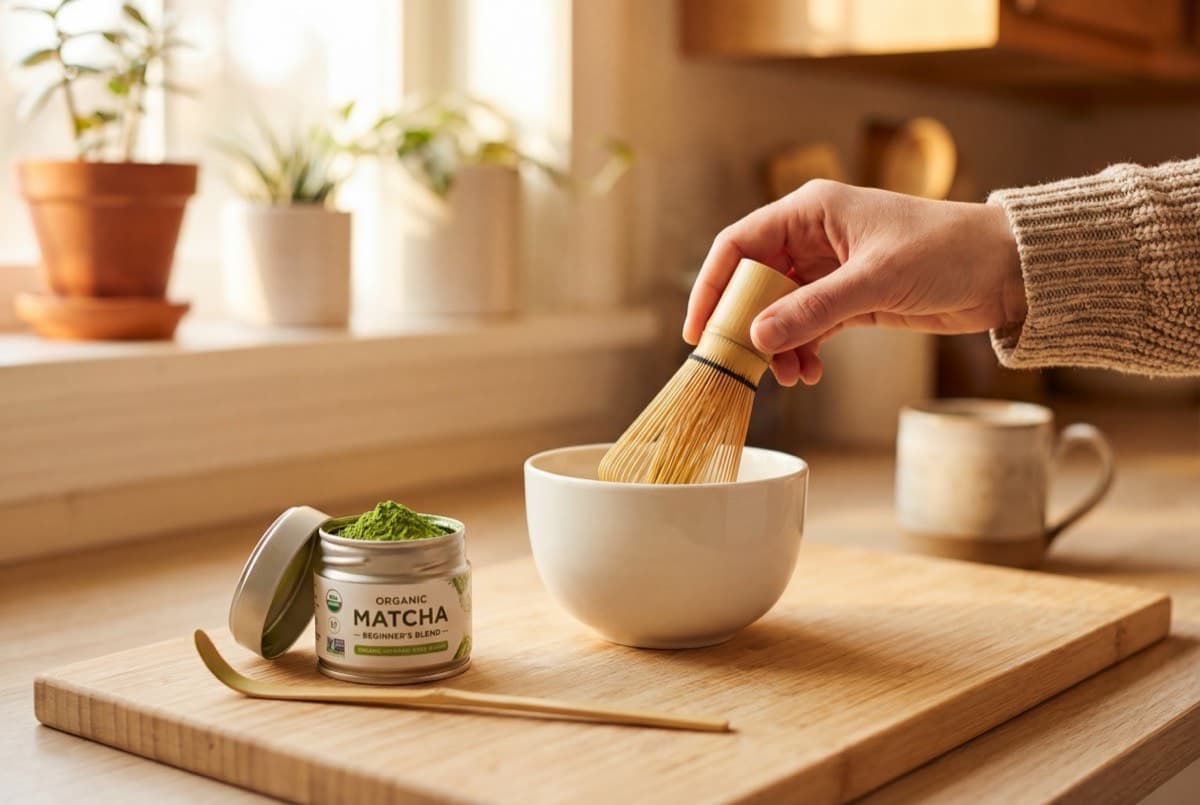
Matcha for beginners: your complete starter guide
You've probably read about it or seen it pop up on social media: matcha is everywhere. But how do you actually get started? Which matcha do you choose, what supplies do you need, and how do you make that first cup without it tasting bitter? In this comprehensive guide, we walk you through it step by step. Whether you're curious about the health benefits or simply looking for a tasty alternative to coffee, after this article you'll know exactly how to get started with matcha.
What is matcha, exactly?
Matcha is a Japanese green tea powder with a history spanning more than 800 years. The big difference from regular green tea is that with matcha you consume the entire tea leaf in powder form, rather than just an infusion. The tea plants are covered with cloths weeks before harvest, causing them to produce extra chlorophyll and the amino acid L-theanine. After harvest, the leaves are steamed, dried, and ground on traditional granite mills into an ultrafine powder.
This special production process ensures that matcha is much richer in nutrients than regular tea. You get more antioxidants, more L-theanine, and a unique combination of caffeine and calming compounds that you won't find anywhere else. Want to learn more about all the health benefits? Read our detailed article on the [benefits of matcha](/blog/matcha-voordelen).
Which matcha do you choose as a beginner?
This is perhaps the most important question for beginners, and unfortunately also where things often go wrong. Not all matcha is equal, and the wrong choice can make your first experience disappointing. There are two main categories you need to know.
Ceremonial grade matcha
This is the highest quality matcha. Ceremonial grade matcha is made from the youngest, most tender tea leaves of the first harvest. The result is a powder with a bright green color, a smooth taste, and a natural sweetness with umami tones. This matcha is meant to be drunk pure, with just water, exactly as it has been done for centuries in the [Japanese tea ceremony](/blog/japanse-theeceremonie).
As a beginner, we recommend starting with ceremonial grade matcha. Why? Because the smooth, non-bitter taste gives you an honest picture of what good matcha should taste like. Many people who say they don't like matcha have only tasted cheap, low-quality matcha. Our [Japanese Matcha Tea A-grade](/product/japanse-matcha-thee-a-grade-30-g-1) is an excellent choice for this.
Culinary grade matcha
Culinary grade matcha is slightly more robust in taste and has a somewhat deeper, sometimes slightly bitter tone. This makes it ideal for use in recipes: lattes, smoothies, pancakes, and pastry. The stronger flavor holds up well next to milk, sugar, and other ingredients. Our [Japanese Matcha for Pastry and Desserts](/product/japanse-matcha-voor-gebak-desserts-30-g) is perfect for this.
Want to understand the difference between both grades in detail? Read our article on [ceremonial vs culinary grade matcha](/blog/ceremonial-vs-culinary-grade-matcha).
Our advice for beginners
Start with ceremonial grade to get to know matcha in its pure form. Once you know you like matcha, you can add culinary grade for lattes and recipes. That way you have the right matcha at home for every application.
What accessories do you need?
One of the fun aspects of matcha is the ritual around it. You need a few specific tools to prepare matcha properly, and fortunately you don't have to spend a fortune on them.
The chasen (bamboo matcha whisk)
This is the most important accessory. The [bamboo matcha whisk (chasen)](/product/bamboe-matcha-klopper-chasen-6-11-cm-80-tanden) is specially designed to whisk matcha clump-free and create a light layer of foam. Our chasen has 80 tines, which ensures an optimal result. A regular whisk or milk frother can mix matcha, but the result is never as good as with a real chasen. Read more about this indispensable tool in our article on the [chasen bamboo matcha whisk](/blog/chasen-bamboe-matcha-klopper).
The chasaku (bamboo matcha spoon)
The [bamboo matcha spoon (chasaku)](/product/bamboe-matcha-lepel-chasaku-18-cm) is the traditional way to measure exactly the right amount of matcha. One full chasaku equals about half a teaspoon, just enough for a standard cup. It's a small but fine tool that helps perfect your dosing.
A matcha bowl (chawan)
A wide, shallow bowl gives your chasen room to whisk properly. The [Tokyo Design Studio Matcha Bowl](/product/tokyo-design-studio-matcha-kom-kobiki-wit-13-8-cm-500-ml) is ideal for this: wide enough to whisk, beautiful to look at, and pleasant to drink from. A regular cereal bowl also works, but a real chawan completes the experience.
Optional: a sieve
A fine mesh tea sieve is handy for sifting your matcha before adding water. This prevents clumps and ensures a smoother result. It's not strictly necessary with good quality matcha, but it does make a difference.
Browse our complete [accessories collection](/shop?collectie=accessoires) for everything you need.
Step by step: your first cup of matcha
Now that you have the right matcha and accessories, it's time to make your first cup. Follow these steps for a perfect result.
Step 1: Warm your bowl
Pour hot water into your matcha bowl and let it sit for a moment. This warms the bowl so your matcha stays warm longer. Pour the water away and dry the bowl.
Step 2: Sift the matcha
Measure 1 to 2 chasaku (or half a teaspoon) of matcha and sift it into your bowl. This takes ten seconds but makes a world of difference for the texture.
Step 3: Add water
Pour in 70 to 80 ml of water at 70 to 80 degrees Celsius. This is crucial: boiling water at 100 degrees burns the delicate tea leaves and makes your matcha bitter. Don't have a thermometer? Let boiled water cool for about two to three minutes.
Step 4: Whisk with the chasen
Grab your chasen and whisk the matcha in a rapid W or M motion. Use your wrist, not your whole arm. Whisk for about 15 to 20 seconds until there's a light, fine layer of foam on top. The foam should be light green with very small bubbles.
Step 5: Enjoy
Your matcha is ready. Drink it within a few minutes, as matcha can settle quickly. Take a moment to consciously experience the color, the aroma, and the taste.
For a detailed explanation with tips, check out our [recipe for making matcha tea](/recepten/matcha-thee-maken).
Common mistakes by beginners
Almost everyone makes a few of these mistakes in the beginning. By knowing them, you can avoid them.
Mistake 1: Using water that's too hot
This is by far the most common mistake. Water at 100 degrees Celsius burns the amino acids and catechins in matcha, resulting in a bitter, unpleasant taste. Always use water between 70 and 80 degrees. This one thing makes the biggest difference in taste.
Mistake 2: Buying matcha that's too cheap
Matcha that costs one euro per bag at the supermarket is not a real matcha experience. It's often old, dull in color, and bitter in taste. Invest in quality matcha from a specialist. Check our [matcha buying guide](/blog/matcha-kopen-gids) for advice on what to look for.
Mistake 3: Not sifting
Matcha powder is so fine that it clumps easily. If you don't sift it, you get dry clumps in your tea that are hard to whisk out even with a chasen.
Mistake 4: Using too much matcha
More is not always better. Start with half a teaspoon per cup. Too much matcha makes your drink unnecessarily bitter and intense. You can always build up once you're used to the taste.
Mistake 5: Not storing matcha properly
Matcha is sensitive to light, air, moisture, and heat. Always store it in an airtight container in a cool, dark place. After opening, it's best to store it in the refrigerator. More tips on this in our article on [storing matcha](/blog/matcha-bewaren).
Too bitter? Here's why (and what to do about it)
If your matcha tastes bitter, it's almost always due to one of these causes:
- Water too hot: as described above, use 80 degrees maximum
- Low quality matcha: cheap matcha is naturally more bitter
- Too much powder: reduce the amount and build up slowly
- Old matcha: matcha quickly loses its flavor after opening, use it within six to eight weeks
- Wrong grade: drinking culinary grade pure can be bitter, use ceremonial grade for this
As a beginner, also try a [matcha latte with oat milk](/recepten/matcha-latte-havermelk). The natural sweetness of oat milk balances the taste and makes it very accessible. Or check out our classic [matcha latte recipe](/recepten/matcha-latte-recept) for a smooth, creamy introduction.
How much matcha per day as a beginner?
As a beginner, it's wise to build up gradually. Start with one cup per day and see how your body responds. Most people can comfortably drink 2 to 3 cups per day, but give your body time to get used to the caffeine and other active compounds.
Drink matcha preferably in the morning or early afternoon. Due to the caffeine content, matcha can affect your sleep if you drink it too late in the day. For detailed advice, read our article on [how much matcha you can drink per day](/blog/hoeveel-matcha-per-dag).
Budget tips: matcha doesn't have to be expensive
Quality matcha is indeed pricier than a box of tea bags, but it's manageable when you look at it closely.
Do the math
A 30-gram bag of ceremonial grade matcha yields about 30 cups (1 gram per cup). If a bag costs around 15 euros, you're paying 50 cents per cup — considerably cheaper than a 5-euro matcha latte at a coffee bar.
Combine smartly
Buy ceremonial grade for your daily cup of pure matcha and culinary grade for lattes and recipes. That way you're not using your most expensive matcha for applications where the difference is barely noticeable.
Start with a gift set
If you want to have everything at once, check out our [gift sets](/shop?collectie=giftsets). These often contain matcha, a chasen, and a chasaku in an affordable package — perfect to start with or to give as a gift.
Store it properly
Nothing wastes your money like matcha that oxidizes because it was stored incorrectly. Airtight, cool, and dark is the motto.
Your first week with matcha: a plan
Here's a realistic schedule to gradually incorporate matcha into your routine.
- Day 1 and 2: Make a traditional matcha with water. Focus on technique: right temperature, proper sifting, correct whisking. Taste the pure flavor.
- Day 3 and 4: Try a matcha latte. Use your favorite plant-based milk and optionally a small amount of honey or agave.
- Day 5: Experiment with an [iced matcha latte](/recepten/iced-matcha-latte-recept) if you enjoy cold drinks.
- Day 6: Make some [matcha pancakes](/recepten/matcha-pancakes) for a fun weekend breakfast.
- Day 7: Reflect. How do you feel? Do you notice any difference in energy, focus, or mood?
Many people notice within the first week that they feel calmer yet more alert, sleep better, and have less need for an afternoon slump snack. Considering [switching from coffee to matcha](/blog/overstappen-koffie-naar-matcha)? Read our article about it as well.
Matcha versus coffee: what's better for beginners?
If you're considering matcha as a coffee replacement, it's useful to know the differences. Matcha contains less caffeine than coffee (30 to 50 mg versus 80 to 120 mg per cup), but the effect is very different. The L-theanine in matcha provides a gradual, long-lasting energy boost without the peaks and crashes of coffee. Read more about this in our article [matcha vs coffee](/blog/matcha-vs-koffie).
Frequently asked questions for beginners
Does matcha taste like grass?
Good matcha has a complex taste with sweet, umami, and slightly green tones. It doesn't taste like grass. If your matcha tastes like grass or hay, it's probably of low quality or too old.
Can I make matcha without a chasen?
Technically, you can whisk matcha with a milk frother or even shake it in a sealed jar. But a chasen gives by far the best result: airy foam, no clumps, and a traditional experience that completes the ritual.
Is matcha suitable for children?
Matcha contains caffeine and is therefore not recommended for young children. Teenagers can potentially drink small amounts in consultation. When in doubt, always consult a doctor.
Can I drink matcha during pregnancy?
This is a frequently asked question. Read our special article on [matcha during pregnancy](/blog/matcha-zwangerschap) for well-researched information.
How long does matcha stay good?
Unopened, matcha can stay good for months when stored in a cool, dark place. After opening, it's best to use it within six to eight weeks for optimal taste and nutritional value.
Where can I buy good matcha in the Netherlands?
At a specialized webshop, you get better quality and advice than at a supermarket. Browse our [matcha powder collection](/shop?collectie=matcha-poeder) for carefully selected Japanese matcha.
Ready to get started?
Matcha is one of those rare products that is both delicious and good for you. It requires a small investment in good matcha and a few accessories, but that pays for itself many times over in taste, health, and daily enjoyment.
Browse our [shop](/shop) for everything you need to get started, or dive deeper into the world of matcha with our [recipes](/recepten). Have questions? Check our [frequently asked questions](/faq) or get in touch. Welcome to the world of matcha.
---
Disclaimer: this article is purely informational and not medical advice. Always consult a doctor for health-related questions.