
Buying Matcha: The Ultimate Guide to Making the Best Choice (2026)
Want to buy matcha but don't know where to start? In this comprehensive guide, you'll learn everything about quality grades, origin, color, taste, and price — so you always choose the right matcha.
Buying matcha: how to recognize quality?
Not all matcha is the same. The difference between good and bad matcha is enormous — in taste, color, and nutritional value. Whether you're buying matcha for the first time or have been drinking it for years, it's important to know what to look for. In this buying guide, we explain everything so you always make the right choice.
At [The Matcha Shop](/shop), we exclusively select matcha of Japanese premium quality. But even within our range, there are differences you should understand to make the best choice for your use.
The three quality grades explained
Ceremonial grade
This is the highest quality matcha that exists. Ceremonial matcha is made from the youngest tea leaves of the first harvest, which are hand-picked and then slowly ground on granite stone mills. The result is an ultrafine powder with a smooth, creamy, and complex taste — often described as umami with a slightly sweet finish. Never bitter.
Ceremonial matcha is meant to be drunk pure with just water. You'll need a [bamboo matcha whisk (chasen)](/product/bamboe-matcha-klopper-chasen-6-11-cm-80-tanden) and a [matcha spoon (chasaku)](/product/bamboe-matcha-lepel-chasaku-18-cm) for the traditional preparation. Check out our [step-by-step guide](/recepten/matcha-thee-maken) to make the perfect cup.
Our [A+ Grade Matcha](/product/japanse-matcha-thee-a-grade-30-g-1) is an excellent example of ceremonial quality.
Premium grade
From the second harvest, slightly stronger in taste than ceremonial matcha, but still of high quality. Premium grade matcha has a light bitterness that makes it perfect for a matcha latte — the flavor comes through the milk beautifully. Also suitable for drinking pure if you prefer a slightly more robust taste.
This is the most versatile grade: suitable for both pure preparation and latte recipes. Also read our [matcha latte recipe](/recepten/iced-matcha-latte-recept) for the perfect preparation with oat milk.
Culinary grade
Culinary grade matcha is made from later harvests and has a stronger, more bitter taste. This is not bad matcha — it is specifically designed for cooking and baking. The stronger flavor ensures that the matcha taste comes through well in recipes where matcha is combined with other ingredients.
Ideal for: smoothies, pancakes, ice cream, cakes, and other [matcha recipes](/recepten). Our [Matcha for Pastry and Desserts](/product/japanse-matcha-voor-gebak-desserts-30-g) is perfect for this. Curious about the exact difference? Read our detailed article on [ceremonial vs culinary grade matcha](/blog/ceremonial-vs-culinary-grade-matcha).
5 characteristics of good matcha
1. Color
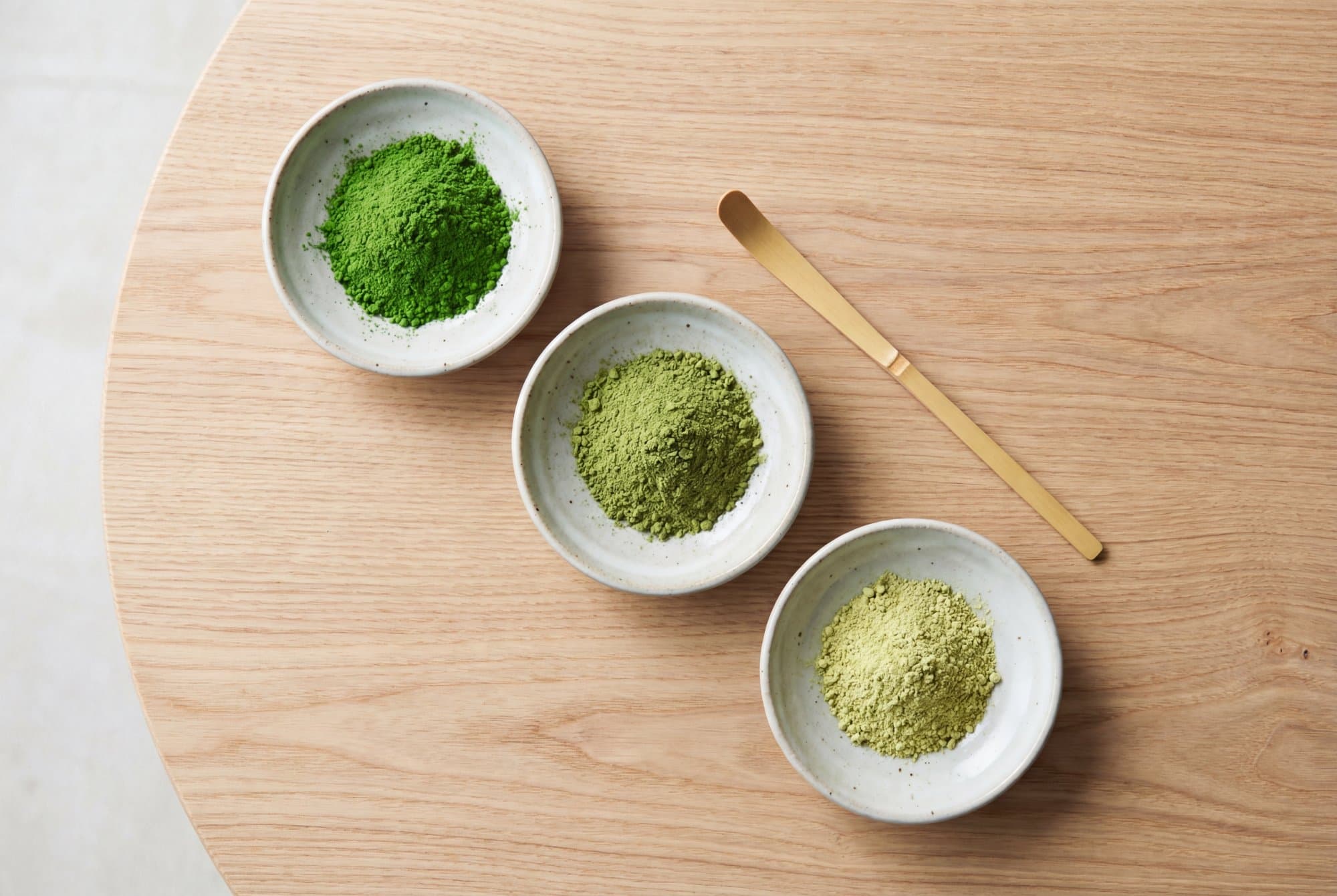
Good matcha is bright green — vibrant and lively, almost neon green. If the powder is yellowish, brown, or dull green, it indicates lower quality or oxidation. The green color comes from the high chlorophyll content, which results from shading the tea plants in the weeks before harvest.
Tip: compare the color of your matcha with a photo of premium Japanese matcha. The difference from supermarket matcha is usually immediately visible.
2. Aroma
Fresh matcha smells fresh and slightly sweet, with a subtle grassy tone that is pleasant. If it smells like hay or is musty, it's probably old or poorly stored. Good matcha has an aroma reminiscent of fresh green vegetables and spring.
3. Texture
High-quality matcha feels silky smooth, similar to talcum powder or flour. If it feels gritty, it's more coarsely ground and of lower quality. The finest matcha is ground on traditional granite stone mills — a process that produces only 30 grams per hour.
4. Origin
The best matcha comes from Japan, particularly from the regions of Uji (Kyoto), Nishio (Aichi), Kagoshima, and Shizuoka. These regions have the perfect climate and centuries of expertise for producing top-quality matcha.
Matcha from China or other countries is often cheaper but lacks the refined taste and strict quality oversight of Japanese production. At The Matcha Shop, we work exclusively with Japanese tea farms — read more about our sourcing on our [About Us page](/over-ons).
5. Price
Good matcha is not cheap, and there's a reason for that. For 30 grams of ceremonial matcha, you typically pay between 20 and 35 euros. The labor-intensive production process — shading, hand-picking, steaming, drying, and slow grinding on stone mills — naturally makes matcha a precious product.
If something is significantly cheaper, it's almost certainly of lower quality. Be especially critical of matcha under 10 euros per 30 grams — this is almost always culinary grade or even of non-Japanese origin.
Packaging and storage
Matcha is sensitive to light, air, and heat. These three factors break down the nutrients, antioxidants, and color. That's why proper packaging and storage are essential:
- Buy matcha packaged in an airtight, light-tight tin or bag
- Avoid matcha in transparent packaging — light breaks down the nutrients
- After opening, store matcha in the refrigerator, well sealed
- Use it within 6 to 8 weeks for the best taste and color
- An unopened container stays good for months in a cool, dark place
More tips on storing matcha can be found in our article [Storing matcha: how to keep it fresh](/blog/matcha-bewaren).
Online vs. supermarket: where to buy the best matcha?
Supermarket matcha
You can find matcha at some supermarkets and drugstores, but the quality is almost always culinary grade or lower. The price may seem attractive, but per gram you often pay just as much as for better matcha from a specialist. Moreover, supermarket matcha often sits on the shelf for a long time under fluorescent lighting, which further degrades the quality.
Specialized webshops
The best matcha is purchased from specialized shops that buy directly from Japanese producers. Advantages include: fresher stock, better quality selection, more choice in grades and origins, and expert advice.
At [The Matcha Shop](/shop), we order in small batches directly from Japan. This ensures you always receive fresh, high-quality matcha. Order before 3:00 PM and you'll have it tomorrow — [free shipping](/verzending) from 50 euros.
Frequently asked questions about buying matcha
Is organic matcha better?
Organic matcha is grown without synthetic pesticides, which is a plus. But organic doesn't say everything about taste or quality. A non-organic ceremonial matcha can taste better than an organic culinary grade. So pay attention to both factors: grade and cultivation method.
Can I buy matcha at the supermarket?
Yes, but the quality is often lower and the price per gram not always better. For the best taste experience, we recommend buying from a specialist.
How long does a container of matcha last?
With daily use of 2 grams per cup, 30 grams of matcha lasts about 2 to 3 weeks. Want to know more? Read our article on [how much matcha you can drink per day](/blog/hoeveel-matcha-per-dag).
What accessories do I need?
For traditional preparation, you need at minimum a [bamboo whisk (chasen)](/product/bamboe-matcha-klopper-chasen-6-11-cm-80-tanden). A [matcha bowl](/product/tokyo-design-studio-matcha-kom-kobiki-wit-13-8-cm-500-ml) and [chasaku](/product/bamboe-matcha-lepel-chasaku-18-cm) complete the experience. You can also start with one of our complete sets in the [shop](/shop).
Browse our matcha
At The Matcha Shop, we exclusively select high-quality matcha, directly from Japan. Whether you're a beginner or an experienced matcha drinker, in our [collection](/shop?collectie=matcha-poeder) you'll find the matcha that suits you.
Also check out our [matcha benefits](/blog/matcha-voordelen) to read why so many people are making the switch, or discover the difference with coffee in our article [matcha vs coffee](/blog/matcha-vs-koffie).
The best matcha for beginners
If you've never had matcha before, the choice can be overwhelming. Our tip: start with a ceremonial grade matcha and prepare it pure with water the first time. This way you'll get to know the real taste of matcha without milk or sugar masking it.
If you find the pure taste too intense, you can always switch to a matcha latte. Many of our customers start with pure matcha and discover that they appreciate the taste more and more after a few days. It's a taste that grows on you — similar to how you might not have liked olives as a child but enjoy them now.
For beginners, we recommend starting with our [A+ Grade Matcha 30g](/product/japanse-matcha-thee-a-grade-30-g-1) combined with a [chasen](/product/bamboe-matcha-klopper-chasen-6-11-cm-80-tanden). This gives you everything you need for the perfect first experience.
Giving matcha as a gift
Matcha is also a wonderful gift for health and tea enthusiasts. A complete set with matcha powder, a bamboo whisk, and a chasaku spoon is a thoughtful and unique gift that most people don't know yet. Browse our [gift sets](/shop?collectie=giftsets) for ready-to-go options, or put together your own combination in our [shop](/shop).
In summary: what to look for when buying matcha?
To make it easy, here's the checklist you can use when buying matcha:
- Grade: choose ceremonial for pure drinking, culinary for recipes
- Color: should be bright green, not yellowish or brown
- Origin: Japan (Uji, Kagoshima, Shizuoka, or Nishio)
- Texture: silky smooth, not gritty
- Packaging: airtight and light-tight
- Price: expect at least 15-20 euros per 30 grams for good quality
- Freshness: check the expiration date and buy from a specialist with fast turnover
With this knowledge, you're ready to choose the perfect matcha. Browse our [full selection](/shop?collectie=matcha-poeder) and order today — free shipping from 50 euros.
This article is purely informational.