
Matcha and Weight Loss: What Does the Science Say?
Does matcha help with weight loss? We look at what the science says about matcha, metabolism, and fat burning — honestly and without the hype.
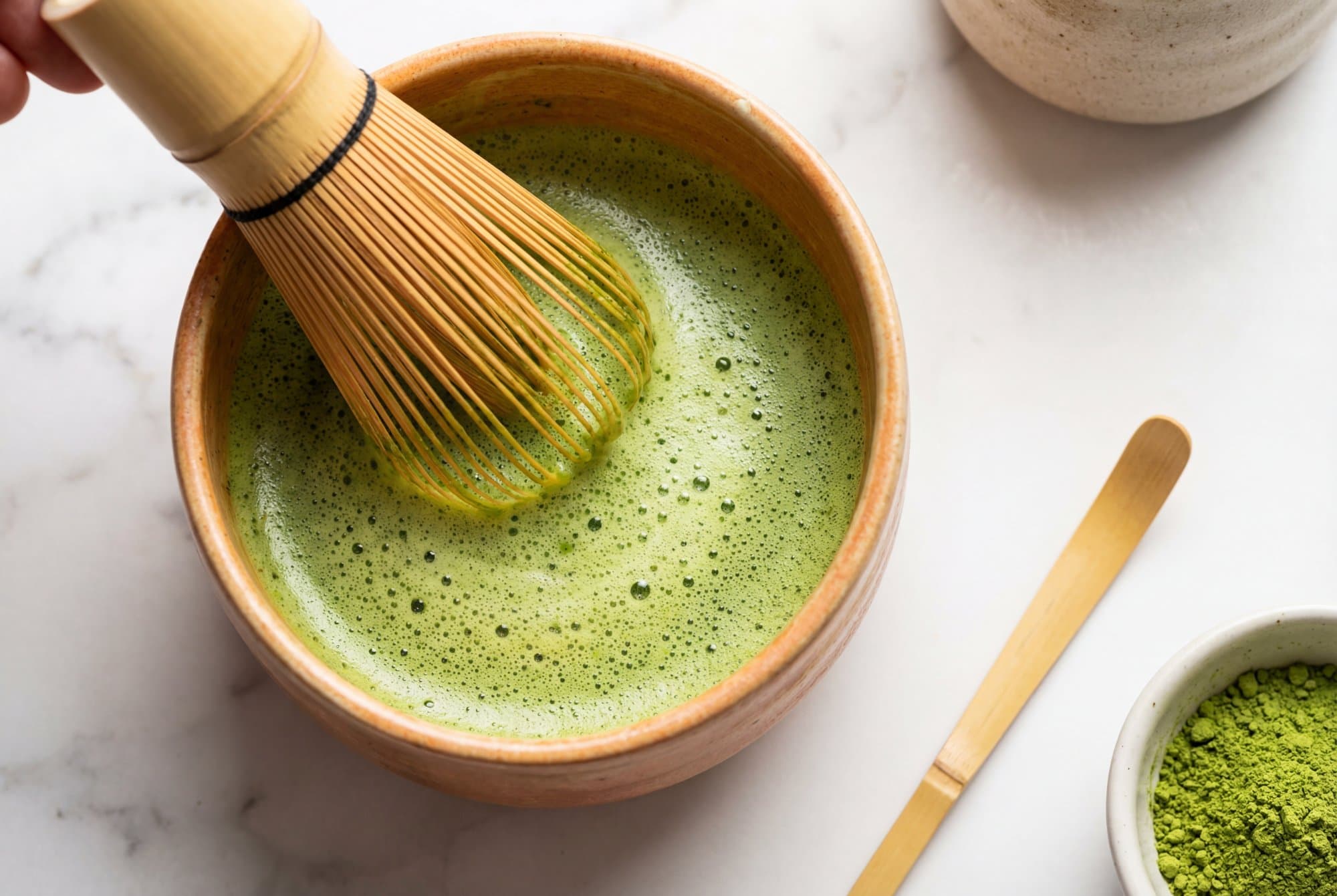
Does matcha help with weight loss?
Matcha is often presented online as a miracle solution for weight loss. The reality is more nuanced. Matcha can support your metabolism, but it's not a magic fix. In this article, we take an honest look at what the science says — without the hype. We examine the active compounds, the scientific evidence, and how to use matcha most effectively as part of a healthy lifestyle.
Want to first read more about the [general health benefits of matcha](/blog/matcha-voordelen)? That article provides a good foundation for this topic.
Why matcha is different from other green tea
Before we dive into the science, it's important to understand why matcha is different from regular green tea. With regular green tea, you steep loose leaves or a tea bag in water and throw the leaves away afterward. With matcha, you drink the ground tea leaf itself. This means you take in all the nutrients contained in the leaf — not just the compounds that dissolve in water.
Specifically, this means that a cup of matcha can contain up to 137 times more EGCG than a cup of regular green tea. This difference is relevant when discussing the effects on metabolism and fat burning. Curious about the difference between [ceremonial and culinary matcha](/blog/ceremonial-vs-culinary-grade-matcha)? The quality of your matcha partly determines how many active compounds it contains.
What's in matcha that's relevant?
Matcha contains two compounds associated with metabolism and fat burning: EGCG (epigallocatechin gallate) and caffeine. Additionally, L-theanine plays an indirect but interesting role.
EGCG — the powerful catechin
EGCG is a powerful catechin and antioxidant found primarily in green tea. Because you consume the entire tea leaf with matcha, you take in significantly more EGCG than with regular green tea. EGCG is the most studied catechin when it comes to metabolism and fat burning. It inhibits certain enzymes that break down noradrenaline, keeping your body in a state of elevated energy expenditure for longer.
Caffeine — the metabolism stimulant
Caffeine is a well-known metabolism stimulant that can temporarily increase your body's energy expenditure. A cup of matcha contains about 60 to 70 mg of caffeine — comparable to half a cup of coffee. The difference is that caffeine in matcha is released more slowly thanks to the combination with L-theanine. Want to know more about this difference? Read our article on [matcha versus coffee](/blog/matcha-vs-koffie).
L-theanine — the indirect helper
L-theanine is an amino acid unique to tea, found in high concentrations in matcha. Although L-theanine itself doesn't directly stimulate fat burning, it plays an indirect but important role. It reduces stress and cortisol levels. Chronically high cortisol is associated with fat storage, especially around the abdomen. Additionally, L-theanine promotes better sleep, which is essential for a healthy weight.
What does the research say?
Thermogenesis
Multiple studies have shown that the combination of EGCG and caffeine can increase the thermogenic effect — meaning your body uses slightly more energy when processing food. This effect is measurable but modest: it amounts to an increase of about 3 to 8 percent of your daily energy expenditure.
A meta-analysis published in the International Journal of Obesity looked at 11 studies and concluded that green tea catechins had a significant but small effect on weight loss and weight maintenance after a diet. The average additional weight loss was 1.3 kilograms over a period of 12 weeks.
Fat burning during exercise
There are indications that green tea extract, specifically EGCG, can increase fat burning during physical activity. This means your body draws a larger proportion of energy from fat instead of carbohydrates during exercise.
A study in the American Journal of Clinical Nutrition showed that participants who took green tea extract before exercising burned 17 percent more fat than the control group. This effect was strongest during moderately intense activity, such as brisk walking, cycling, or jogging.
Effect on blood sugar
A stable blood sugar level is important for weight management. Peaks and valleys in your blood sugar lead to hunger and sugar cravings. Research suggests that EGCG can improve insulin sensitivity, keeping your blood sugar more stable after a meal. This can indirectly help prevent overeating.
Effect on gut flora
Recent research increasingly focuses on the role of gut flora in weight management. Polyphenols in matcha, including EGCG, appear to promote the growth of beneficial gut bacteria. A healthy gut flora is associated with better weight management and less inflammation in the body.
Important perspective
These effects are statistically significant in research, but modest in practice. You won't noticeably lose weight just by drinking matcha. It works as support for a healthy eating pattern and sufficient exercise — not as a replacement. Be critical of sources that claim matcha offers a quick fix for weight loss.
What matcha can do
Although matcha is not a miracle solution for weight loss, it can contribute to a healthier lifestyle that supports weight management in several ways.
Long-lasting, stable energy
Matcha provides long-lasting energy without the crash you know from coffee. This keeps you more active, you move more, and you're less likely to reach for sugary snacks for a quick energy boost. Many people who [switch from coffee to matcha](/blog/overstappen-koffie-naar-matcha) notice this as one of the first benefits.
Calm focus and more mindful eating
The combination of caffeine and L-theanine promotes calm alertness. This helps with more mindful eating — you're more present in the moment and less inclined to snack out of habit or emotion. Mindful eating is a powerful tool for weight management.
Low-calorie alternative
A cup of matcha without additions contains fewer than 5 calories. Compare that with a cafe latte with sugar (200+ calories) or a soft drink (150+ calories). By replacing sweet drinks with a [matcha latte with oat milk](/recepten/matcha-latte-havermelk), you save considerably on calories while still enjoying a delicious drink.
Ritual and structure
Preparing matcha is a conscious ritual. You weigh the matcha, sift it, whisk it. This daily ritual can contribute to more structure and mindfulness in your day — something that indirectly helps with a healthier lifestyle. Discover more about the [Japanese tea ceremony](/blog/japanse-theeceremonie) if you're interested in this aspect of matcha.
How to use matcha most effectively for weight management?
If you want to use matcha as support for a healthier weight, there are a few practical tips that make the difference.
Drink it pure or with few additions
The benefits of matcha are negated if you drink it as a sugar-laden matcha latte with whipped cream. Preferably drink your matcha pure, or with a little oat milk and no sugar. Check our [recipes page](/recepten) for inspiration.
Timing matters
Drink matcha preferably in the morning or early afternoon. Some studies suggest that drinking matcha 30 to 60 minutes before exercising can optimize fat burning. Avoid matcha in the evening due to the caffeine content — good sleep is essential for a healthy weight.
Be consistent
The effects of matcha on metabolism are greatest with regular use. One cup per week makes little difference. Aim for 1 to 2 cups per day for the best results. Read more about [how much matcha you can drink per day](/blog/hoeveel-matcha-per-dag).
Combine with exercise
Matcha is most effective as a complement to an active lifestyle. The fat-burning properties are enhanced by physical activity. Even a daily 30-minute walk makes a difference.
Choose the right quality
Not all matcha is equal. Higher quality matcha contains more EGCG, L-theanine, and other nutrients. [Culinary grade matcha](/product/japanse-matcha-voor-gebak-desserts-30-g) is fine for smoothies and baking, but for daily drinking, you're better off choosing [A-grade](/product/japanse-matcha-thee-a-grade-30-g) or [A+ grade matcha](/product/japanse-matcha-thee-a-grade-30-g-1). Read our [buying guide](/blog/matcha-kopen-gids) for more help choosing.
Frequently asked questions
How much matcha should you drink to notice an effect?
Most studies use 2 to 4 grams of matcha per day, which amounts to 1 to 2 cups. Drinking more doesn't necessarily yield more effect and can cause side effects due to the caffeine content. Check our article on [how much matcha per day](/blog/hoeveel-matcha-per-dag) for more details.
When is the best time to drink matcha?
In the morning or early afternoon, preferably 30 to 60 minutes before exercising. Don't drink matcha too late in the day because of the caffeine content. A [matcha latte](/recepten/matcha-latte-recept) in the morning is the ideal starting point for many people.
Does quality matter?
Yes, absolutely. Higher quality matcha contains more EGCG and L-theanine than lower qualities. Ceremonial and A-grade matcha contain the highest concentrations of nutrients. We recommend browsing our [matcha collection](/shop?collectie=matcha-poeder) for the best options.
Can I drink matcha during intermittent fasting?
Yes. Pure matcha contains fewer than 5 calories and won't break your fast. In fact, the combination of caffeine and EGCG can support the benefits of fasting by stimulating fat burning. Just don't add milk or sugar during your fasting window.
Does matcha also help with belly fat?
There are indications that EGCG may specifically promote fat burning in the abdominal area, but the evidence is limited and not conclusive. A healthy eating pattern and regular exercise remain the most important factors for reducing belly fat.
Can I combine matcha with other supplements?
Matcha combines well with most dietary supplements. Be careful with extra caffeine supplements to avoid excessive caffeine intake. When in doubt, always consult your doctor or dietitian.
Matcha recipes that fit a healthy diet
Looking for ways to incorporate matcha into your diet without extra calories? Here are a few ideas:
- Pure matcha: The lowest calorie option. Learn how to [make matcha tea](/recepten/matcha-thee-maken) the traditional way.
- Matcha smoothie bowl: Combine matcha with frozen banana, spinach, and a splash of oat milk for a nutritious breakfast. Check out our [matcha smoothie bowl recipe](/recepten/matcha-smoothie-bowl).
- Iced matcha: Perfect for warm days and just as healthy as hot matcha. Discover our [iced matcha recipes](/recepten/iced-matcha-recepten).
- Matcha latte with oat milk: Creamy and delicious with relatively few calories. Use our [matcha latte recipe](/recepten/matcha-latte-havermelk) as a starting point.
Our advice
Drink matcha for the taste, the energy, and the focus. If it also contributes a little to your metabolism on the side, that's a nice bonus. But don't expect miracles — consistency in your eating pattern and exercise remains the most important thing.
What matcha can do is help you make better choices throughout the day. More energy, fewer crashes, calmer focus, and a conscious daily ritual. Those are the real benefits that make a difference in the long run.
Curious to get started? Our [A+ Grade matcha](/product/japanse-matcha-thee-a-grade-30-g-1) contains a high concentration of EGCG and L-theanine, and tastes smooth and creamy without bitterness. Combine it with a [bamboo chasen](/product/bamboe-matcha-klopper-chasen-6-11-cm-80-tanden) and a [chasaku](/product/bamboe-matcha-lepel-chasaku-18-cm) for the perfect preparation experience. Browse our complete [matcha collection](/shop) to discover what suits you.
This article is purely informational and not medical advice. Consult a doctor or dietitian for personal nutritional advice.