
How Much Matcha Can You Drink Per Day?
How many cups of matcha per day is safe? Read about caffeine content, recommended amounts, and when to best drink matcha.
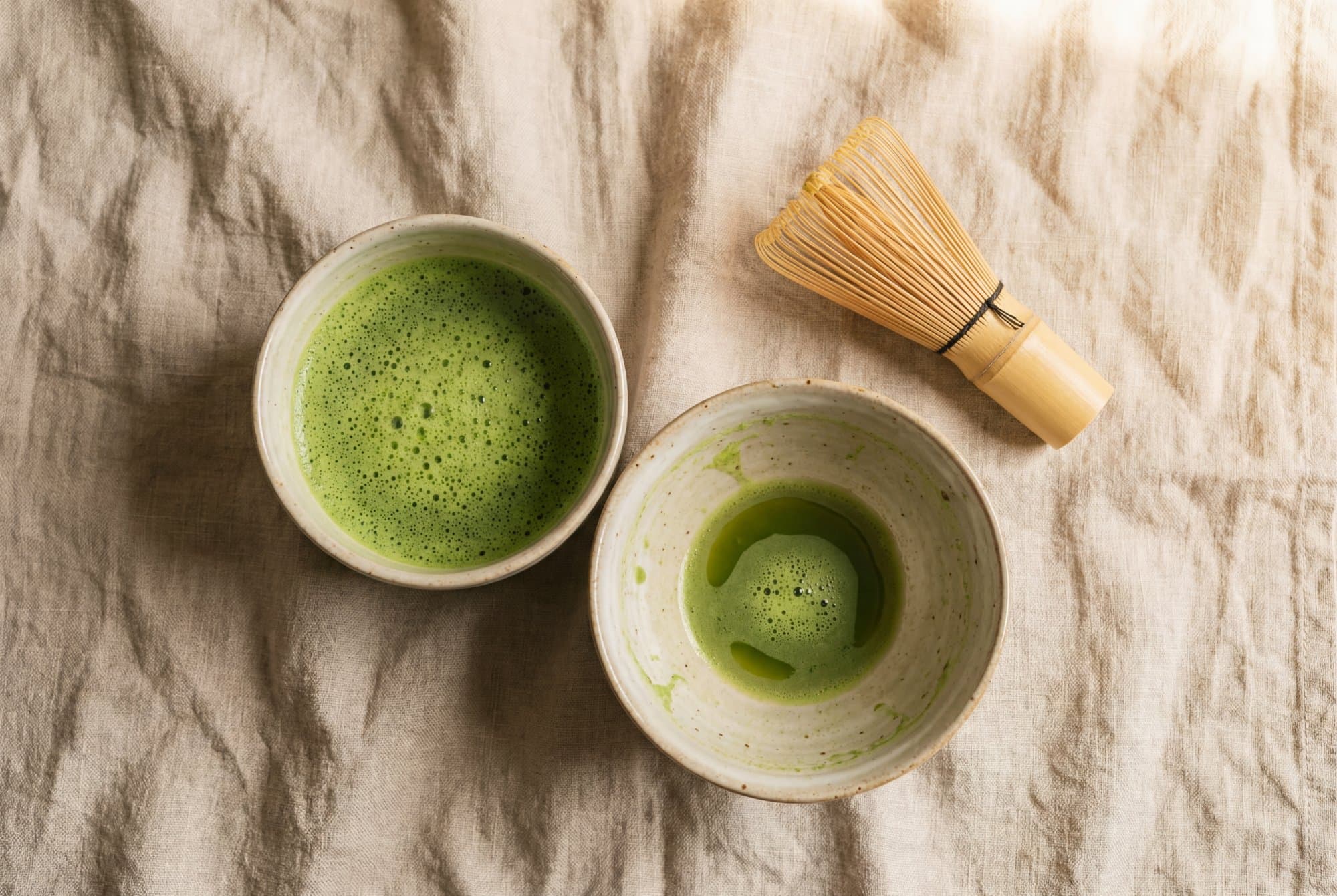
One of the most frequently asked questions we receive at [The Matcha Shop](/over-ons) is: how much matcha can you actually drink per day? It's a fair question. Matcha is packed with healthy compounds, but it also contains caffeine. In this comprehensive article, we dive deep into the science behind matcha consumption, discuss the recommended amounts for different groups, and give you practical tips to get the most out of your daily matcha.
How much matcha per day is safe?
The generally recommended amount of matcha is 2 to 4 grams per day, which translates to 1 to 2 cups of matcha tea or [matcha latte](/recepten/matcha-latte-recept). This gives you the benefits of matcha — energy, focus, antioxidants — without consuming too much caffeine.
This recommendation is based on guidelines from the European food authority EFSA and on traditional Japanese consumption patterns. In Japan, where matcha has been consumed for centuries, 1 to 3 cups per day is most common. This pattern has contributed to matcha's reputation as a healthy beverage.
It's important to realize that this guideline is a general recommendation. Your ideal amount depends on factors such as your body weight, your sensitivity to caffeine, your overall health, and how many other caffeine sources you consume in a day.
Caffeine in matcha: the facts
Let's look at the numbers. One gram of matcha contains an average of 30 mg of caffeine. With a standard serving of 2 grams per cup, that amounts to approximately 60 mg of caffeine per cup.
For comparison with other popular beverages:
- Cup of coffee (150 ml): 80 to 100 mg caffeine
- Espresso (30 ml): 60 to 80 mg caffeine
- Cup of matcha (2 grams): 60 mg caffeine
- Black tea (150 ml): 40 to 70 mg caffeine
- Green tea (150 ml): 20 to 45 mg caffeine
- Cola (330 ml): 30 to 40 mg caffeine
Matcha thus contains comparable amounts of caffeine to coffee, but the big difference lies in how that caffeine works. Curious about the full story? Read our detailed comparison in [matcha vs coffee](/blog/matcha-vs-koffie).
Why caffeine in matcha works differently
What's special about matcha is that alongside caffeine, it also contains a high concentration of L-theanine. This amino acid has a calming effect on the nervous system and modulates the action of caffeine. The result is what many drinkers describe as calm alertness: you're focused and energetic, but without the nervousness, heart palpitations, or crash you can experience with coffee.
L-theanine promotes the production of alpha waves in the brain, which are associated with a state of relaxed concentration. This is precisely why Zen monks have been drinking matcha for centuries before meditation — it keeps you awake and focused while your mind stays calm and clear.
The EFSA recommends a maximum of 400 mg of caffeine per day for healthy adults. That means you could theoretically drink up to 6 cups of matcha. In practice, however, we recommend 2 to 3 cups as a comfortable maximum, to maintain an optimal balance between benefits and potential side effects.
Health benefits with regular use
With an intake of 2 to 4 grams per day, you benefit from an impressive range of [health benefits of matcha](/blog/matcha-voordelen). Here's an overview of what the science says:
Antioxidants
Matcha contains extremely high concentrations of catechins, a group of powerful antioxidants. The most important is EGCG (epigallocatechin gallate), which research suggests can reduce inflammation, protect cells from damage, and support the immune system. One cup of matcha contains up to 137 times more EGCG than a regular cup of green tea, because with matcha you consume the entire leaf instead of an infusion.
Metabolism and weight
Multiple studies show that the combination of caffeine and catechins in matcha can stimulate fat burning and increase metabolism. This makes matcha a popular choice for people working toward a healthy weight. Read more about this in our article on [matcha and weight loss](/blog/matcha-afvallen).
Concentration and memory
The combination of caffeine and L-theanine in matcha is unique and has been described by researchers as a nootropic combination: it improves attention, working memory, and reaction time without the side effects of pure caffeine.
Cardiovascular health
Regular consumption of green tea, including matcha, is associated in long-term studies with a lower risk of cardiovascular disease. The catechins in matcha help regulate cholesterol levels and support healthy blood pressure.
When is the best time to drink matcha?
Matcha contains caffeine, so the timing of when you drink it matters. The best moments are:
- In the morning (7:00 - 10:00): As a replacement for or addition to coffee. Many people who [switch from coffee to matcha](/blog/overstappen-koffie-naar-matcha) notice that a cup of matcha at breakfast gives them more stable energy throughout the morning.
- In the late morning (10:00 - 12:00): A second cup of matcha when you notice your morning energy starting to wane. Combine it with a healthy snack.
- In the early afternoon (12:00 - 14:00): For an energy boost after lunch, when many people experience a dip. A [matcha latte with oat milk](/recepten/matcha-latte-havermelk) is perfect for this.
- Before exercise: 30 to 60 minutes before your workout for extra focus, endurance, and fat burning.
When is it better not to?
Avoid matcha after 4:00 PM if you're sensitive to caffeine. The half-life of caffeine is 4 to 6 hours, meaning the caffeine from a cup of matcha at 4:00 PM can still be active when you go to bed at 10:00 PM. However, some people are less sensitive and can drink matcha into the late afternoon without sleep issues — know your own body.
Don't drink matcha on a completely empty stomach if you have a sensitive stomach. The catechins can cause stomach irritation in some people. Have your matcha with or shortly after a light meal or snack.
Can you drink too much matcha?
Yes, you can. Although matcha contains many healthy compounds, the rule applies here too: more is not always better. Too much matcha can lead to the same complaints as too much caffeine:
- Restlessness and nervousness: Especially if you drink more than 4 to 5 cups per day.
- Insomnia: From drinking matcha too late in the day or from too high a total caffeine intake.
- Heart palpitations: In people who are sensitive to caffeine.
- Stomach issues: The tannins in matcha can cause stomach irritation with excessive use.
- Headaches: Both from too much caffeine and from suddenly stopping caffeine.
Additionally, there are a few other considerations with excessive matcha use:
- Oxalates: Matcha contains small amounts of oxalates. With extremely high use, this could theoretically contribute to the formation of kidney stones in people who are susceptible. With normal use of 2 to 4 grams per day, this is not a concern.
- Iron absorption: The tannins in green tea can reduce the absorption of non-heme iron (from plant sources). Therefore, preferably don't drink matcha simultaneously with iron-rich meals — wait an hour.
- Heavy metals: Tea plants can absorb small amounts of lead and other heavy metals from the soil. With matcha, you consume the entire leaf, so quality is crucial. Always choose matcha from a reliable origin, preferably from Japan where strict quality controls apply. At [The Matcha Shop](/shop), we carefully select our matcha for quality and safety.
Does it vary by matcha quality?
Yes, absolutely. The quality of your matcha has a direct impact on how much you can comfortably drink and how good you feel.
Higher quality matcha ([ceremonial grade, A-grade](/blog/ceremonial-vs-culinary-grade-matcha)) contains more L-theanine relative to caffeine. This better ratio ensures that the effect of caffeine is better balanced. You feel alert but calm, and you're less likely to experience nervousness or a crash.
Lower quality matcha contains proportionally more caffeine and less L-theanine. As a result, you may become restless sooner and experience side effects earlier. You'll also notice the difference in taste: lower quality matcha is more bitter and astringent.
This is an extra reason to invest in good matcha — you need less of it for the same effect, and the experience is more pleasant. Our [A+ Grade matcha](/product/japanse-matcha-thee-a-grade-30-g-1) and [A Grade matcha](/product/japanse-matcha-thee-a-grade-30-g) are excellent examples. Want to learn more about choosing the right matcha? Read our [matcha buying guide](/blog/matcha-kopen-gids).
Recommendations per group
Not everyone has the same needs. Here are our recommendations broken down by group:
Beginners
1 cup per day (2 grams) is a good starting point. Let your body get used to the combination of caffeine and L-theanine. Start by drinking your matcha in the morning and observe how you feel throughout the day. After a week or two, you can potentially build up to 2 cups.
Tip: start with a [matcha latte](/recepten/matcha-latte-recept) instead of pure matcha. The milk softens the taste and makes it more accessible.
Regular drinkers
2 to 3 cups per day (4 to 6 grams) is a comfortable and healthy pattern for most adults. Spread your cups across the morning and early afternoon. This gives you stable energy without peaks and valleys.
Athletes
1 cup before training (30 to 60 minutes beforehand) for extra focus and endurance. The combination of caffeine for energy and L-theanine for focus makes matcha an excellent pre-workout drink. You can combine this with your regular 1 to 2 cups during the day.
Pregnant women
Extra caution is needed here. The EFSA and the Netherlands Nutrition Centre advise pregnant women to stay under 200 mg caffeine per day. That amounts to a maximum of 2 to 3 cups of matcha, but also account for other caffeine sources in your diet (chocolate, cola, tea). Always discuss your matcha intake with your midwife or doctor. Read more in our article on [matcha during pregnancy](/blog/matcha-zwangerschap).
Children and adolescents
Matcha is not recommended for children under 12 due to the caffeine content. Adolescents between 12 and 18 should not consume more than 100 mg of caffeine per day, which amounts to a maximum of 1 cup of matcha.
People with caffeine sensitivity
If you know you're sensitive to caffeine, start with a half serving (1 gram of matcha) and see how you react. The L-theanine in matcha generally makes it better tolerated than coffee, but every body is different.
Practical tips for your daily matcha
- Invest in quality: Good matcha like our [A+ Grade](/product/japanse-matcha-thee-a-grade-30-g-1) gives more satisfaction per cup. You need less and feel better.
- Store your matcha properly: Matcha quickly loses its potency with improper storage. Read our tips on [storing matcha](/blog/matcha-bewaren) and consider an airtight [tea container](/product/tokyo-design-studio-matcha-ume-thee-container-7-5-3-3-cm-30-g).
- Mix it up: Don't drink your matcha the same way every day. Alternate between pure matcha, a [matcha latte with oat milk](/recepten/matcha-latte-havermelk), a [matcha smoothie bowl](/recepten/matcha-smoothie-bowl), or an [iced matcha latte](/recepten/iced-matcha-latte-recept). This keeps things interesting and gives you variety in nutrients.
- Prepare it properly: Use the right [accessories](/shop?collectie=accessoires) — a [bamboo chasen](/product/bamboe-matcha-klopper-chasen-6-11-cm-80-tanden), a [matcha sieve](/product/matcha-zeef-rvs-6-9-19-2-cm), and water at 80 degrees Celsius. Well-prepared matcha tastes better and gives you more satisfaction, making you less inclined to drink extra cups. Check out our guide for [making matcha tea](/recepten/matcha-thee-maken).
- Listen to your body: If you notice you're becoming restless, sleeping poorly, or getting stomach issues, drink less matcha or shift the timing to earlier in the day.
Summary
Stick to 2 to 4 grams of matcha per day for the best balance between benefits and safety. Drink it in the morning or early afternoon, and choose higher quality matcha to get the most out of every cup. Always listen to your body and adjust your intake based on how you feel.
Our [A+ Grade matcha](/product/japanse-matcha-thee-a-grade-30-g-1) is perfect for this — a smooth, rich taste with a high L-theanine content that keeps the caffeine in balance. Browse our complete [matcha collection](/shop?collectie=matcha-poeder) in the [shop](/shop) and discover which matcha suits you best. Have questions? Check our [FAQ](/faq) or get in touch.
This article is purely informational and not medical advice.