
Storing Matcha: How to Keep Your Matcha Fresh and Delicious
Learn how to best store matcha powder. Tips on temperature, light, air, and shelf life for optimal taste and color.
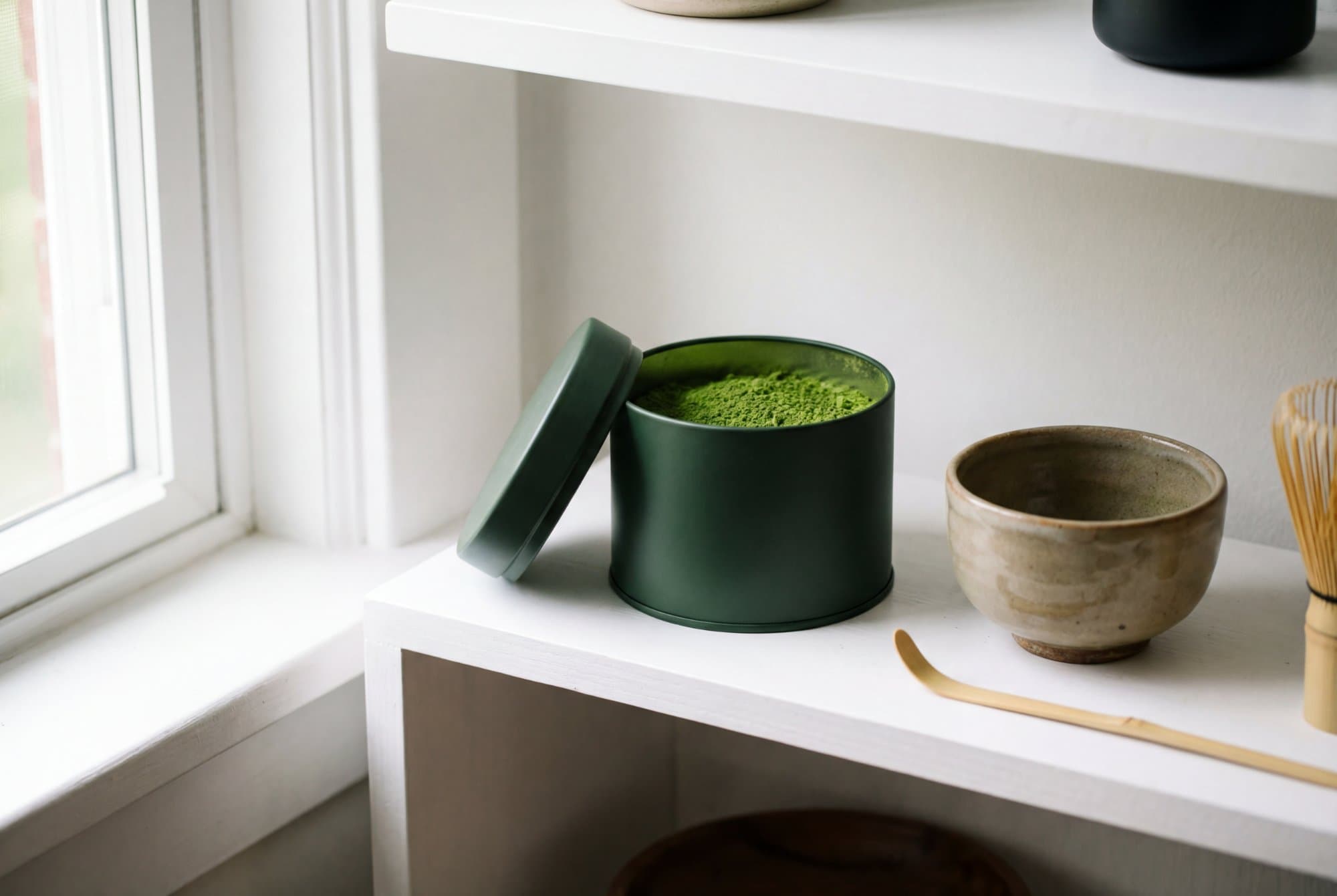
How do you best store matcha?
Matcha is a fresh product that is sensitive to light, air, and heat. If you store it incorrectly, it quickly loses its bright green color, smooth taste, and nutrients. With proper storage, your matcha stays fresh and delicious for weeks. In this article, we explain in detail what matcha's enemies are, how to best store it, and give practical tips to maximize the shelf life of your [matcha powder](/shop?collectie=matcha-poeder).
Whether you've just bought your first bag of matcha or have been a fan for years — the way you store matcha makes an enormous difference in taste, color, and nutritional value. Let's dive in.
Why storing matcha properly is so important
Matcha isn't ordinary tea. It's a finely ground powder of high-quality green tea leaves that were grown in the shade. This production process — which we describe in detail in our article about the [Japanese tea ceremony](/blog/japanse-theeceremonie) — results in a product with an exceptionally high concentration of chlorophyll, catechins (including EGCG), L-theanine, and other sensitive nutrients.
The problem is that these compounds are also extremely sensitive to environmental factors. As soon as matcha comes into contact with light, air, or heat, a degradation process begins that you cannot reverse. Poor storage can turn a [high-quality A+ grade matcha](/product/japanse-matcha-thee-a-grade-30-g-1) into a dull, bitter disappointment within a few weeks.
The three enemies of matcha
1. Light
Sunlight and artificial light break down the chlorophyll and catechins in matcha. Chlorophyll is responsible for the characteristic bright green color of matcha. When exposed to light — especially UV radiation — it loses its vibrancy and the matcha turns yellowish or brownish.
But it's not just about color. The breakdown of chlorophyll goes hand in hand with the loss of EGCG and other catechins responsible for the [health benefits of matcha](/blog/matcha-voordelen). A study in the Journal of Food Science showed that exposure to light can reduce the EGCG concentration in green tea by as much as 20 percent in just two weeks.
Practical advice: Always store matcha in an opaque, light-tight container. Never leave the tin or bag open on the counter near a window. A special [matcha tea container](/product/tokyo-design-studio-matcha-ume-thee-container-7-5-3-3-cm-30-g) is ideal for this — they're designed to completely block out light.
2. Air (oxygen)
Oxygen oxidizes matcha, causing it to lose its flavor and nutritional value. After opening a package, this process begins immediately. Oxidation affects both the taste and the color: the matcha becomes more bitter and loses its freshness.
This process is called enzymatic oxidation and it's the same process that turns a cut apple brown. With matcha, it happens more slowly, but the effect is just as irreversible. The more surface area exposed to oxygen, the faster the degradation — and because matcha is a fine powder, it has an enormous surface area.
Practical advice: Seal your matcha as quickly as possible after each use. Press excess air out of the bag before closing it, or use a container with an airtight lid. The less air inside the packaging, the better.
3. Heat
High temperatures accelerate the degradation of matcha. Heat speeds up both oxidation and the breakdown of chlorophyll, catechins, and amino acids. Even room temperature can be too high for optimal storage on warm summer days.
At temperatures above 25 degrees Celsius, the degradation process accelerates noticeably. This is why matcha in Japan is traditionally stored in cool storage spaces and why professional tea shops often keep their matcha refrigerated.
Practical advice: Store matcha in a cool place, away from the stove, oven, dishwasher, or direct sunlight. The refrigerator is the best option for opened matcha.
Step-by-step storage guide
Here's an overview of how to store matcha depending on the situation.
Unopened matcha
Unopened matcha in an airtight, factory-sealed package can be stored in a dark, cool cabinet. As long as the package is sealed, it's protected from air and moisture. The cabinet should be away from heat sources like the oven or a radiator. Unopened matcha stays good this way for up to 12 months.
Opened matcha — daily use
If you use matcha daily or multiple times a week, store it in an airtight container in a cool, dark place. A kitchen cabinet that isn't next to the stove works fine. Make sure to close the container immediately after each use.
Opened matcha — occasional use
Do you only use matcha a few times a month? Then the refrigerator is the best storage location. The low temperature significantly slows oxidation and keeps the color and taste intact longer.
Note: Make sure the packaging is completely airtight when storing matcha in the refrigerator. Matcha easily absorbs odors from other food. A container that doesn't seal properly next to a piece of cheese is a recipe for disappointment.
Extra tip: Remove the matcha from the refrigerator 10 to 15 minutes before use. This allows it to reach room temperature and prevents condensation from forming on the powder when you open the container.
What if you buy a lot of matcha at once?
If you buy a larger supply of matcha, store what you'll use in the coming weeks in a small container and leave the rest unopened in the original packaging. This way you don't keep opening your entire supply, limiting exposure to air.
Shelf life: a practical overview
Here's an overview of matcha shelf life under different conditions:
- Unopened, sealed, cool cabinet: up to 12 months
- Opened, airtight, refrigerator: 8 to 12 weeks of optimal quality
- Opened, airtight, room temperature: 4 to 6 weeks of optimal quality
- Opened, not airtight: 1 to 2 weeks before noticeable quality loss occurs
After the optimal period, you'll notice the color becoming duller and the taste less fresh. The matcha is still safe to consume, but the quality is noticeably lower. Matcha past its optimal period can still be used for [baking and desserts](/product/japanse-matcha-voor-gebak-desserts-30-g) or in a [matcha smoothie bowl](/recepten/matcha-smoothie-bowl) where the subtleties are less noticeable.
How to recognize poorly stored matcha?
Not sure if your matcha is still good? Watch for these signs:
- Color: Fresh matcha is bright, vibrant green. If it has turned yellowish, brownish, or dull green, significant degradation has occurred.
- Aroma: Fresh matcha smells fresh and slightly grassy. Old or poorly stored matcha smells musty, flat, or not at all.
- Taste: Fresh matcha has a smooth, creamy taste with a light sweetness. If it predominantly tastes bitter or flat, the quality has declined.
- Texture: If the matcha is clumpy or has absorbed moisture, it's no longer optimal. It's still safe to use, but the quality is limited.
Common mistakes when storing matcha
We often see these mistakes, and they're easy to avoid:
Storing matcha in the freezer after opening
This is commonly suggested advice, but it's a bad idea for opened matcha. Every time you take the matcha out of the freezer, condensation forms on the cold powder. This moisture is devastating for matcha — it accelerates clumping and mold growth. Only store unopened, fully sealed packages in the freezer as long-term storage.
Storing matcha in a glass jar
Glass jars are not light-tight. Even when stored in a cabinet, they're exposed to light every time you open the cabinet. Always choose an opaque container.
Using a wet spoon
Always use a dry spoon or a [bamboo chasaku](/product/bamboe-matcha-lepel-chasaku-18-cm) to scoop matcha from the package. Even a small amount of moisture can cause clumps and accelerate spoilage.
Storing matcha next to strong-smelling food
Matcha absorbs odors like a sponge. Don't store it next to coffee, spices, cheese, or other strong-smelling products — especially not in the refrigerator.
Buying packages that are too large
Buy matcha in small quantities if you don't drink it daily. It's better to buy a small 30-gram bag more often than a large package that sits open for months. Our [matcha powders](/shop?collectie=matcha-poeder) are therefore available in convenient 30-gram portions.
The right storage accessories
How you store matcha also depends on the container you use. Not all tins and jars are suitable.
What works
- Traditional Japanese tea tins: These are designed for storing tea and seal airtight. Our [matcha tea container from Tokyo Design Studio](/product/tokyo-design-studio-matcha-ume-thee-container-7-5-3-3-cm-30-g) is a great example — light-tight, airtight, and stylish.
- Opaque tins with screw-top lids: Make sure the lid has a rubber ring for an airtight seal.
- The original packaging: Many quality matcha products come in an aluminum bag with a zip-lock closure. This works fine — just press the air out before sealing.
What doesn't work
- Glass jars (not light-tight)
- Plastic containers without an airtight seal
- Paper bags (not airtight or light-tight)
- Open dishes or bowls
Storing matcha while traveling
Taking matcha on vacation or to the office? Use a small, airtight tin and only bring the amount you'll need in the coming days. Don't leave your matcha in a hot car and store it in your carry-on luggage when flying. Also check out our [gift sets](/shop?collectie=giftsets) — they often contain conveniently packaged matcha that's perfect for on the go.
The role of matcha quality in shelf life
Higher quality matcha is generally more resistant to aging than lower qualities. This is because the leaves are more carefully selected and processed. Nevertheless, the same storage rules apply to all qualities.
Want to learn more about the different qualities? Read our article on [ceremonial versus culinary grade matcha](/blog/ceremonial-vs-culinary-grade-matcha) or check out our [buying guide](/blog/matcha-kopen-gids) for help choosing the right matcha.
Summary: the golden rules
Remember these five rules and your matcha will stay fresh as long as possible:
1. Protect from light — always store matcha in an opaque container
2. Limit air contact — close the packaging immediately after use and press air out
3. Keep it cool — the refrigerator is ideal for opened matcha
4. Keep it dry — always use dry utensils and avoid condensation
5. Buy small quantities — better to buy fresh more often than to store for a long time
Store your matcha in style
Our [matcha tea containers](/product/tokyo-design-studio-matcha-ume-thee-container-7-5-3-3-cm-30-g) from Tokyo Design Studio are specially designed for storing matcha. They're airtight, light-tight, and look beautiful on your counter or tea table. Combine them with our [matcha accessories](/shop?collectie=accessoires) for a complete set, or browse the [tableware collection](/shop?collectie=servies) for matching matcha bowls.
Still looking for the perfect matcha to store? Browse our [shop](/shop) for the full selection.
This article is purely informational.